
Table of Contents
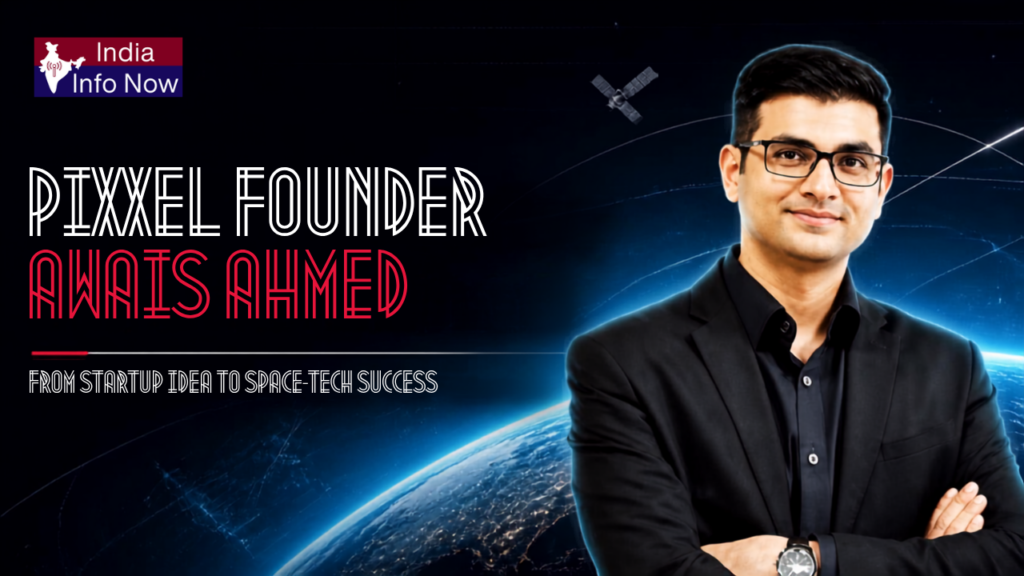
TogglePixxel Founder Awais Ahmed: From Startup Idea to Space-Tech Success
The Idea Behind Pixxel
Pixxel was founded with a clear technological vision: use satellites equipped with hyperspectral imaging technology to collect highly detailed information about the Earth’s surface.
Traditional satellite cameras generally capture images using a limited number of spectral bands. Hyperspectral imaging, however, observes objects and surfaces across a much wider range of wavelengths.
This additional spectral information can help distinguish between different materials and identify changes that may not be visible in ordinary satellite images.
For example, hyperspectral data can potentially help identify crop stress, mineral composition, pollution, water conditions, forest changes, and other environmental patterns.
This technology creates opportunities across multiple industries, including:
- Agriculture
- Mining
- Environmental monitoring
- Climate research
- Infrastructure
- Defence and security
- Disaster management
- Natural-resource management
The idea was to transform satellite imagery from simply being pictures of the Earth into a source of detailed and actionable intelligence.
Awais Ahmed and the Founding of Pixxel
Awais Ahmed co-founded Pixxel in February 2019, alongside Kshitij Khandelwal and other engineers.
The founders believed that advances in space technology, sensors, computing, and data analytics could make satellite-based Earth intelligence significantly more useful and accessible.
Their long-term goal was ambitious: create a constellation of satellites capable of collecting frequent, high-resolution hyperspectral data across the planet.
Instead of relying on occasional observations, a large satellite constellation could provide more regular information about changes taking place on Earth.
This could be particularly valuable for industries where conditions change rapidly, such as agriculture, climate monitoring, disaster response, and infrastructure management.
From a Startup Idea to Space
Building a space company is far more complicated than launching an ordinary technology startup.
Pixxel had to develop advanced imaging technology, design spacecraft, work with launch providers, establish ground infrastructure, process enormous amounts of satellite data, and ultimately turn that data into useful information for customers.
One of the company’s important milestones came in April 2022, when Pixxel launched its satellite Shakuntala aboard a SpaceX Falcon 9 rocket.
The launch attracted considerable attention because it represented an important milestone for India’s emerging private space sector.
For a young startup, successfully putting its own satellite into orbit demonstrated that Indian private companies could participate in increasingly sophisticated parts of the global space industry.
Building a Satellite Constellation
Pixxel’s ambition goes beyond launching a single spacecraft.
The company has been working toward developing a constellation of Earth-observation satellites. A constellation can provide more frequent coverage than an individual satellite, allowing the company to monitor changes across different regions more regularly.
The ultimate objective is to create a large-scale Earth intelligence network capable of collecting detailed hyperspectral information and making that information available through digital platforms.
This approach combines three major areas:
Space systems + Earth observation + intelligent software
The satellites collect the information, while sophisticated software and data-processing systems can turn enormous quantities of raw imagery into useful insights.
Applications of Pixxel's Technology
One of the most promising applications is agriculture.
Hyperspectral imagery could help identify crop stress, nutrient deficiencies, disease patterns, and changes in vegetation. Such information could allow farmers, agricultural companies, and policymakers to make better decisions.
In mining, hyperspectral data can help identify and map mineral compositions, potentially reducing the time and cost involved in exploration.
For environmental monitoring, satellites can help observe forests, water bodies, pollution, and other changes occurring over large geographical areas.
The technology can also contribute to disaster management by providing information about affected areas after events such as floods, fires, or other natural disasters.
Climate researchers can use Earth-observation data to better understand environmental changes and monitor long-term patterns.
A Major Funding Milestone
Pixxel’s growth has also been supported by significant investment from global investors.
In September 2026, the company raised $100 million in Series C funding, a round reported by Reuters as the largest funding round for an Indian space-tech company at that time.
The funding round was led by Temasek and Seraphim Space Investment Trust, alongside participation from existing and new investors.
The investment brought Pixxel’s total funding to approximately $195 million, giving the company additional financial resources to expand its satellite constellation, strengthen its Earth-intelligence platform, and develop spacecraft-related capabilities.
For Pixxel, this funding represents more than financial backing. It provides resources to accelerate research, engineering, satellite production, data infrastructure, and international expansion.
Pixxel’s vision is also expanding beyond simply operating satellites.
The company aims to build a broader technology ecosystem involving spacecraft systems, connected sensing, Earth intelligence, and software.
This is significant because the future of the space industry is increasingly moving toward integrated systems rather than isolated spacecraft.
Satellites generate enormous amounts of data, but the real value comes from converting that data into useful information and decisions.
Pixxel’s broader approach is therefore to combine hardware, sensors, data processing, and software into an integrated platform.
The Bigger Vision
Pixxel’s long-term vision extends beyond Earth.
The company sees today’s Earth-observation technologies as part of a larger foundation for humanity’s future activities in space.
Technologies developed for understanding Earth’s environment could eventually contribute to understanding other planets, moons, asteroids, and the resources and environments of the solar system.
In this vision, Earth is only the starting point.
The company’s philosophy is essentially about improving humanity’s ability to see, understand, navigate, and eventually operate beyond our planet.
Lessons from Pixxel's Journey
Pixxel’s story offers several lessons for entrepreneurs and technology innovators.
Think beyond the immediate market: The founders started with a specific Earth-observation problem but developed a much broader long-term vision.
Solve real-world problems: Satellite data becomes valuable when it can address practical challenges in agriculture, climate, mining, infrastructure, and disaster management.
Technology requires patience: Space technology involves complex engineering, testing, funding, and regulatory challenges.
Build for the future: Pixxel’s strategy demonstrates the importance of developing technology that can scale as demand grows.
Conclusion
From its founding in 2019 to satellite launches, technological development, international ambitions, and major investment rounds, Pixxel’s journey represents the rise of India’s private space-tech ecosystem.
Awais Ahmed and his co-founders started with an ambitious idea: build advanced hyperspectral imaging satellites capable of providing a much deeper understanding of Earth.
Today, Pixxel’s vision extends beyond individual satellites toward a broader ecosystem of space systems, Earth intelligence, and intelligent software.
Its journey demonstrates how Indian startups are no longer limited to conventional technology sectors. With innovation, investment, engineering expertise, and a long-term vision, companies like Pixxel are attempting to solve some of the biggest challenges associated with understanding our planet—and potentially, one day, the wider universe.
Frequently Asked Questions
1. Who is Awais Ahmed?
Awais Ahmed is an Indian entrepreneur and the co-founder of Pixxel, a space-tech company focused on advanced Earth-observation and hyperspectral imaging technologies.
2. What is Pixxel?
Pixxel is an Indian space-tech company developing satellites, hyperspectral imaging technology, Earth-intelligence solutions, and related space systems.
3. When was Pixxel founded?
Pixxel was founded in 2019 by Awais Ahmed, Kshitij Khandelwal, and other engineers.
4.What does Pixxel specialize in?
Pixxel specializes in hyperspectral Earth imaging. Its technology captures information across numerous wavelengths of light, providing detailed data about materials and changes on Earth’s surface.
Most Popular
-
 தேர்வு நேரத்தில் குழந்தைகளுக்கு கொடுக்க வேண்டிய 10 மூளை ஆரோக்கிய உணவுகள்
 -
 அசைவ உணவுக்கு இணையான சத்துக்கள் தரும் சைவ உணவுகள் என்னென்ன?
 -
 நெல்லிக்காய் சாறு நன்மைகள் | Amla Juice Benefits in Tamil
 -
 காய்ச்சல் இருக்கும்போது குளிக்கலாமா? செய்ய வேண்டியது, தவிர்க்க வேண்டியது
 -
 சளி, இருமல் வராமல் இருக்க என்ன சாப்பிடலாம்? நோய் எதிர்ப்பு சக்தியை அதிகரிக்கும் உணவுகள்