
Table of Contents
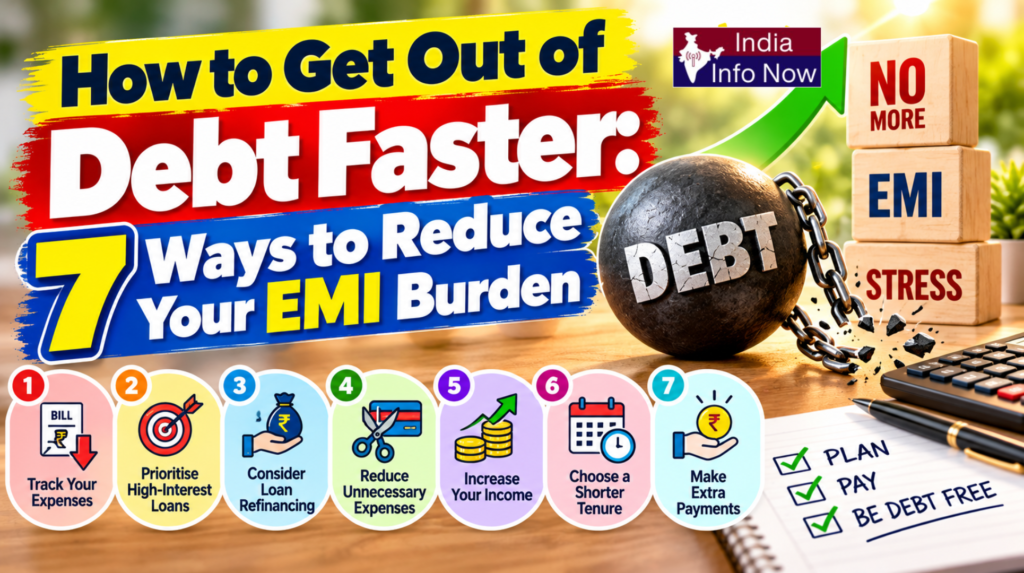
ToggleHow to Get Out of Debt Faster: 7 Ways to Reduce Your EMI Burden
1. List All Your Outstanding Debts
The first step towards becoming debt-free is understanding exactly how much you owe. When you have multiple loans or credit card balances, it can be difficult to keep track of outstanding amounts, interest rates and repayment dates.
Prepare a list of all your current debts and include the following details:
Name of the bank or lending institution
Outstanding loan or credit card balance
Applicable interest rate
Monthly EMI or minimum payment
Remaining repayment period
Payment due date
Any applicable prepayment charges or other fees
Review your loan statements and use your banking applications to collect the necessary information.
Once you have a complete picture of your debt, identify which loans are costing you the most in interest. Credit card balances and high-interest personal loans may deserve priority over lower-interest loans, depending on your financial situation.
Update this list every month as your balances decrease. Having accurate information makes it easier to create a repayment plan, avoid missed payments and measure your progress.
2. Create a Monthly Budget and Reduce Unnecessary Spending
A realistic monthly budget helps you understand where your salary goes and how much money you can direct towards debt repayment.
Start by calculating your take-home income. Then list your essential expenses, such as rent, groceries, utility bills, transportation, insurance and required EMI payments. Next, review discretionary expenses, including online shopping, restaurant visits, entertainment and unused subscriptions.
Identify areas where you can reduce spending without compromising essential needs. The money saved can be used to make additional repayments on your outstanding debt.
For example, if you reduce discretionary expenses by ₹2,000 every month, you could direct that amount towards a high-interest loan. Over time, these additional payments may help lower your outstanding balance and interest costs.
You can also follow a budgeting method such as the 50/30/20 rule, adjusting the percentages to suit your current financial responsibilities. If your EMIs already consume a large share of your income, prioritise essential expenses and debt management before increasing discretionary spending.
3. Pay Your EMIs on Time Every Month
Missing EMI payments can increase your financial burden through late fees, additional interest and possible negative effects on your credit history.
To avoid these problems, make repayment dates a regular part of your monthly financial routine.
Consider these practical steps:
Set reminders a few days before each payment deadline.
Enable automatic payments where suitable.
Keep sufficient funds in your bank account before the debit date.
Review your loan statements to confirm that payments have been processed.
Contact your lender promptly if you anticipate difficulty making a payment.
Making payments on time helps you avoid unnecessary penalties and supports a healthier credit profile. A stronger credit history may also improve your chances of qualifying for competitive loan terms in the future, although approval and interest rates depend on several factors.
If you have already missed a payment, contact your lender as soon as possible to understand the amount due and discuss available options. Ignoring the problem can make it harder to regain control of your finances.
4. Prioritise High-Interest Debt and Consider Consolidation
When you have several outstanding debts, deciding which one to repay first can make a significant difference.
One approach is the debt avalanche method. Continue making the required payments on all your loans, then direct any additional repayment money towards the debt with the highest interest rate. Once that debt is cleared, use the freed-up amount to tackle the next-highest-interest balance.
This strategy can reduce the total interest paid when applied consistently.
Another option is debt consolidation. This involves combining multiple debts into a single loan, potentially with a lower interest rate or a more manageable repayment schedule.
However, consolidation is not automatically beneficial. Before applying, compare the new loan’s interest rate, processing fees, total repayment cost, tenure and any charges associated with closing your existing debts. A lower EMI may simply result from extending the repayment period, which could increase the total interest paid.
Choose consolidation only when the overall terms genuinely support your financial goals and the new repayments are affordable.
If you receive a salary bonus, incentive, tax refund or other surplus income, consider using a portion to reduce your outstanding loan principal.
A part-prepayment reduces the amount you owe. For loans where interest is calculated on the outstanding principal, this can lower future interest costs and potentially shorten the repayment period.
For example, suppose you receive a bonus of ₹30,000. After accounting for essential expenses and emergency savings, you may decide to use ₹15,000 towards an eligible loan prepayment.
Before making the payment, ask your lender how it will be applied. Depending on the loan terms, you may be able to choose between reducing your EMI or shortening your loan tenure. If your existing EMI is affordable and your goal is to become debt-free sooner, reducing the tenure may be worth considering.
Check for applicable prepayment charges, minimum payment requirements and other conditions before proceeding. Also, avoid using your entire emergency fund to repay a loan, as unexpected expenses could force you to borrow again.
The loan tenure you choose affects both your monthly payment and the total interest you pay.
A longer repayment period generally lowers the EMI but may increase the overall interest cost. A shorter tenure usually increases the monthly payment while reducing the time over which interest accumulates.
If your income has increased and your household budget can comfortably accommodate higher payments, consider asking your lender whether you can increase your EMI or shorten your remaining tenure.
For instance, increasing an affordable EMI after a salary hike can help repay the principal more quickly. However, avoid committing to an amount that leaves insufficient money for rent, food, insurance and other necessary expenses.
You can use an online EMI calculator to compare different loan amounts, interest rates and repayment periods before making a decision.
If your current EMI is already difficult to manage, speak with your lender about available repayment options before falling behind. Extending a loan may provide temporary monthly relief, but evaluate the additional interest and overall cost carefully.
7. Explore Lower Interest Rates and Home Loan Balance Transfers
If you have an existing loan, check whether your lender offers a more competitive interest rate or whether another lender can provide better overall terms.
For home loans and certain other eligible loans, a balance transfer allows you to move the outstanding balance to another lender. A lower interest rate may reduce the interest burden or make it possible to repay the loan sooner.
Before transferring a loan, compare:
The current interest rate with the proposed rate
Processing and administrative fees
Applicable foreclosure or transfer-related charges
Remaining tenure and revised EMI
Total interest payable over the remaining loan period
Any conditions attached to the new loan
A small difference in interest rates may not justify a transfer if the fees are high or only a short repayment period remains. Calculate the potential savings before making a decision.
You can also ask your existing lender whether it is willing to offer a rate revision. Compare the available options and choose the one that offers the best overall financial outcome, rather than focusing only on a lower monthly EMI.
Additional Tips to Stay Debt-Free
Along with these seven strategies, develop habits that prevent debt from building up again.
Build an emergency fund: Gradually save enough to cover several months of essential expenses. This can reduce the need to borrow when unexpected costs arise.
Avoid unnecessary new loans: Before taking on additional debt, determine whether the purchase is essential and whether you can afford the repayments.
Use credit cards carefully: Pay the full statement balance whenever possible to avoid revolving interest charges. Avoid relying on minimum payments as a long-term repayment strategy.
Increase repayments when your income rises: Direct part of a salary increase towards debt reduction instead of allowing lifestyle expenses to grow at the same pace.
Review your progress regularly: Check your outstanding balances and repayment plan every month. Celebrate milestones while continuing to meet all required payments.
Final Thoughts: How to get out of debt faster
Getting out of debt faster requires a combination of planning, discipline and informed financial decisions. Start by understanding your outstanding loans, creating a practical budget and paying every EMI on time. Then focus on high-interest debt, make affordable prepayments, review your loan tenure and explore better interest rates where appropriate.
Remember that a lower EMI does not always mean a cheaper loan. Always compare the total repayment cost, fees and interest before changing your loan arrangements.
You do not need to implement every strategy at once. Choose the steps that fit your current circumstances and follow them consistently. With a realistic repayment plan and careful spending habits, you can gradually reduce your debt burden, improve your financial stability and move closer to becoming debt-free.
Frequently Asked Questions
1. How can I get out of debt faster?
Start by listing all your outstanding loans, interest rates and monthly payments. Create a realistic budget, pay all EMIs on time and direct any extra money towards high-interest debt. Consider part-prepayments or refinancing when the overall savings justify the costs.
2. What is the best way to reduce my EMI burden?
You can review your loan interest rate, explore a lower-rate balance transfer, consider a suitable tenure adjustment or consolidate eligible debts. Compare the total repayment cost before making changes, because a lower EMI may increase the total interest you pay.
3. Should I repay the smallest loan first or the loan with the highest interest rate?
The debt avalanche method prioritises the highest-interest debt and can reduce overall interest costs. The debt snowball method prioritises the smallest outstanding balance, helping some people stay motivated. Choose the approach that best fits your finances and repayment discipline.
4. Does making part-prepayments help reduce loan interest?
Yes. For loans where interest is calculated on the outstanding principal, part-prepayments can reduce the balance on which future interest is charged. Depending on the lender’s terms, you may be able to reduce your EMI or shorten the repayment tenure.
Most Popular
-
 தீபாவளி அன்று பட்டாசு வெடிக்கும் பழக்கம் எப்போது தொடங்கியது? | பட்டாசுகளின் வரலாறு
-
 தீபாவளிக்கும் வணிகர்களின் கணக்குப் புத்தகங்களுக்கும் என்ன தொடர்பு? | சோப்டா பூஜை விளக்கம்
-
 சுற்றுச்சூழலுக்கு பாதிப்பு இல்லாமல் தீபாவளி கொண்டாடுவது எப்படி? – 15 வழிமுறைகள்
-
 தீபாவளியின்போது உணவு விஷமாதலைத் தவிர்ப்பது எப்படி? – 15 பாதுகாப்பு வழிமுறைகள்
-
 தீபாவளி அன்று ஏன் புத்தாடை அணிய வேண்டும்? | ஆன்மீக மற்றும் பாரம்பரிய காரணங்கள்