
Table of Contents
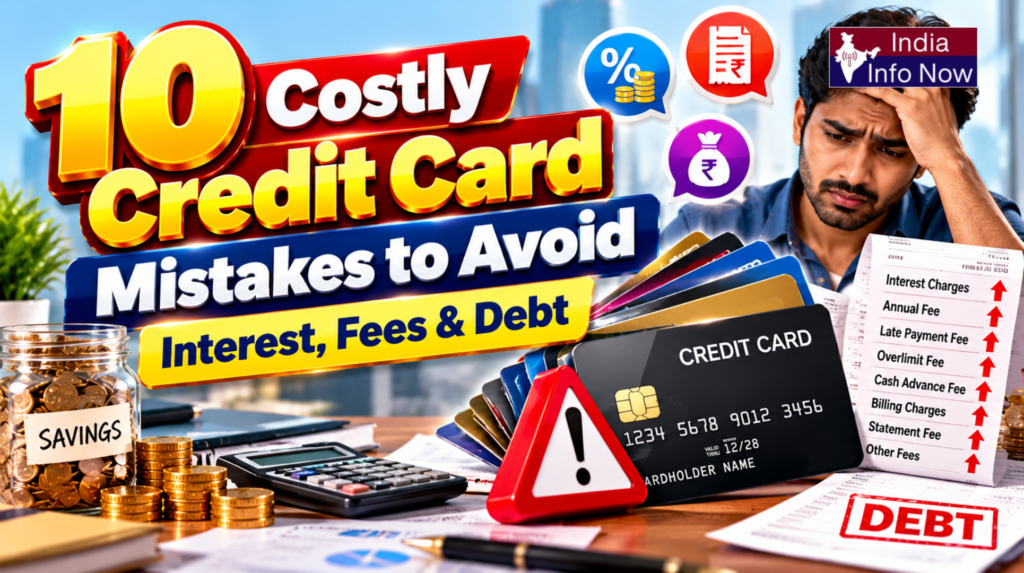
Toggle10 Costly Credit Card Mistakes to Avoid: Interest, Fees & Debt
1. Keeping an Outstanding Balance Every Month
Some credit card users believe that carrying debt from one billing cycle to the next will improve their credit score. This is not necessary. You can build a positive credit history without paying interest on an outstanding balance.
When you leave a large unpaid amount on your card, your credit utilisation ratio may rise. This ratio compares your outstanding balance with your total available credit, and high utilisation can negatively affect your credit score.
For example, if your credit limit is ₹1,00,000 and you owe ₹50,000, your credit utilisation is 50%.
Carrying debt can also result in interest charges that reduce the value of cashback and rewards you earn.
How to avoid it: Pay your complete statement balance by the due date whenever possible. Review your card’s terms to understand when interest applies, especially for cash advances and other transactions that may not receive an interest-free period.
2. Making Only the Minimum Payment
Your credit card statement specifies a minimum amount payable by the due date. Although paying this amount may help you avoid certain consequences of non-payment, it does not eliminate the remaining debt.
The unpaid balance may continue to attract interest, making your purchases more expensive. If you repeatedly pay only the minimum, repayment can stretch over many months or even years.
How to avoid it: Make full payment a priority. If your current financial situation prevents you from clearing the entire bill, limit additional card spending and create a realistic repayment strategy. Focus on reducing the outstanding balance as quickly as your budget allows.
3. Forgetting the Payment Deadline
Missing your credit card payment date can result in late fees, additional interest and negative credit-reporting consequences. Repeated or prolonged delays may make it harder to qualify for future loans or credit facilities.
Even when you have enough money to pay the bill, forgetting the due date can create unnecessary expenses.
How to avoid it:
Set reminders several days before the due date.
Enable payment notifications from your card issuer.
Consider automatic payments if you can maintain sufficient funds in your bank account.
Check your payment confirmation after completing the transaction.
Paying early can help you avoid last-minute technical issues or banking delays.
4. Spending More Than You Can Afford
A credit card allows you to purchase items immediately and repay the amount later. This convenience can make it easy to lose track of spending, particularly when purchasing clothes, electronics, restaurant meals or travel packages.
If your monthly expenses exceed your income, you may struggle to clear your credit card bill. This can lead to a cycle of borrowing, interest charges and increasing debt.
How to avoid it: Establish a monthly spending budget and include your credit card purchases in it. Before making a large purchase, check whether you can afford to repay the amount without affecting essential expenses, emergency savings or other financial commitments.
5. Using Most of Your Available Credit
Your credit limit represents the maximum borrowing amount available on your card, not money that belongs to you.
Using a large percentage of this limit can increase your credit utilisation ratio. This may affect your credit score and leave less room for unexpected expenses.
For example, if your credit limit is ₹80,000 and your outstanding balance is ₹60,000, your utilisation ratio is 75%.
Keeping utilisation below 30% is a commonly recommended guideline, although a lower ratio may be preferable. No particular percentage guarantees a specific credit score.
How to avoid it: Track your spending regularly, avoid unnecessary purchases and pay down your outstanding balance when possible. If your expenses are consistently high, review your budget rather than relying on a higher credit limit to support unaffordable spending.
Tax treatment depends on factors such as the length of eligible continuous service, the amount withdrawn and the applicable provisions of income tax law.
In certain circumstances, an EPF withdrawal made before completing five years of continuous service may be taxable. Exceptions and rules for counting previous service or transferred balances may apply.
Tax may also be deducted at source in qualifying cases, subject to the applicable thresholds, documentation and tax rules. Completing five years of continuous service can affect the tax treatment of a withdrawal, but individual circumstances matter.
If your withdrawal involves a substantial amount or a complicated employment history, consult a qualified tax professional. Do not assume that every PF withdrawal is tax-free or that tax is always deducted.
Paying your bill without checking the statement can cause you to overlook incorrect charges, duplicate transactions, suspicious purchases or unexpected fees.
Your statement may also reveal automatic subscription payments for services you no longer use. Reviewing it helps you identify spending patterns and take action before small expenses accumulate.
How to avoid it: Examine your statement every month. Check the transaction list, total balance, interest charges, fees and payment deadline. If you find a transaction you do not recognise, contact your card issuer immediately and follow its dispute process.
7. Closing Old Credit Card Accounts Without Planning
After clearing a card balance, you may want to close the account to simplify your finances. However, closing a card can reduce your total available credit and increase your overall utilisation ratio if you continue spending on other cards.
The effect on your credit profile depends on your circumstances, account history and the scoring model used. Keeping every card open is not always necessary, especially when an account has high fees or creates a temptation to overspend.
How to avoid it: Compare the card’s annual fee, benefits, security risks and effect on your available credit before deciding. If you retain an old account, monitor it regularly and protect it from unauthorised use.
8. Withdrawing Cash Using Your Credit Card
Credit card cash advances can provide quick access to money, but they are often an expensive borrowing option. Depending on your card’s terms, you may pay a cash withdrawal fee and interest from the transaction date.
Unlike eligible purchases, cash advances may not benefit from an interest-free period. Repeated withdrawals can therefore increase your debt quickly.
How to avoid it: Check the cash advance fee and interest rate before withdrawing money. Use this facility only when necessary, and compare it with other affordable options available to you.
9. Overlooking Fees and Additional Charges
A credit card’s cost includes more than the amount you spend. Depending on the card, you may encounter joining fees, annual fees, late payment charges, cash advance fees, foreign currency conversion charges and reward redemption fees. Applicable taxes may increase the final cost.
A card advertised with attractive benefits may not be economical if its fees outweigh the rewards you receive.
How to avoid it: Read the card’s terms, fee schedule and key fact statement before applying. Check annual fee waiver conditions, interest rates, international transaction charges and reward redemption restrictions. Compare the total cost of different cards before making a decision.
10. Choosing a Card for Rewards Instead of Your Needs
Different credit cards offer benefits for different spending categories, including groceries, fuel, travel, dining and general purchases. Selecting a card that does not match your lifestyle may prevent you from receiving meaningful value.
Another common mistake is spending extra money just to earn cashback or reward points. If the additional purchases lead to interest charges, the rewards may be worth far less than the amount you spend.
How to avoid it: Review your regular expenses and choose a card that fits your actual spending habits. Compare annual fees, reward rates, redemption conditions and other benefits. Use rewards for purchases you would make anyway, rather than treating them as a reason to spend more.
Practical Tips for Responsible Credit Card Use
Adopting a few consistent habits can help you manage your credit card more effectively:
Pay your bill in full: Avoid carrying unnecessary debt from month to month.
Stay within your budget: Spend only what you can reasonably repay.
Keep utilisation under control: Avoid using most of your available credit.
Set payment reminders: Reduce the risk of missing deadlines.
Review transactions: Check for billing errors, fraud and unwanted subscriptions.
Understand the charges: Read the fee schedule and repayment conditions.
Use rewards carefully: Never spend extra just to collect points or cashback.
Protect your card details: Enable transaction alerts and report suspicious activity promptly.
Check your credit report: Review your credit information periodically and dispute inaccurate entries through the appropriate channels.
Conclusion
Credit cards can support convenient payments and offer useful rewards when used responsibly. However, carrying unnecessary debt, paying only the minimum, missing payment deadlines, overspending and ignoring fees can create avoidable financial pressure.
The best approach is to treat your credit card as a borrowing facility that must be repaid, not as an extension of your income. Plan purchases carefully, pay your statement balance on time and understand the costs associated with your card.
By avoiding these 10 credit card mistakes, you can reduce unnecessary expenses, manage repayments more effectively and work towards stronger financial stability.
Frequently Asked Questions
1. What are the most common credit card mistakes?
Common mistakes include paying only the minimum amount due, missing payment deadlines, carrying outstanding balances, overspending, using too much of the credit limit and ignoring hidden fees.
2. What happens if I pay only the minimum amount on my credit card?
The remaining balance may continue to attract interest, increasing the total amount you owe. It can also take much longer to repay your debt compared with paying the full statement balance.
3. Does missing a credit card payment affect my credit score?
Yes, a missed or delayed payment can affect your credit history and credit score, depending on the duration of the delay and the lender’s reporting practices. You may also incur late fees and additional interest.
4. What is a good credit card utilisation ratio?
Keeping your credit utilisation below 30% is a commonly recommended guideline. A lower ratio may be beneficial, but no particular percentage guarantees a specific credit score.
Most Popular
-
 தீபாவளி அன்று பட்டாசு வெடிக்கும் பழக்கம் எப்போது தொடங்கியது? | பட்டாசுகளின் வரலாறு
-
 தீபாவளிக்கும் வணிகர்களின் கணக்குப் புத்தகங்களுக்கும் என்ன தொடர்பு? | சோப்டா பூஜை விளக்கம்
-
 சுற்றுச்சூழலுக்கு பாதிப்பு இல்லாமல் தீபாவளி கொண்டாடுவது எப்படி? – 15 வழிமுறைகள்
-
 தீபாவளியின்போது உணவு விஷமாதலைத் தவிர்ப்பது எப்படி? – 15 பாதுகாப்பு வழிமுறைகள்
-
 தீபாவளி அன்று ஏன் புத்தாடை அணிய வேண்டும்? | ஆன்மீக மற்றும் பாரம்பரிய காரணங்கள்