
Table of Contents
ToggleAdikesava Perumal Temple, Sriperumpudur – Timings, How to Reach, Location
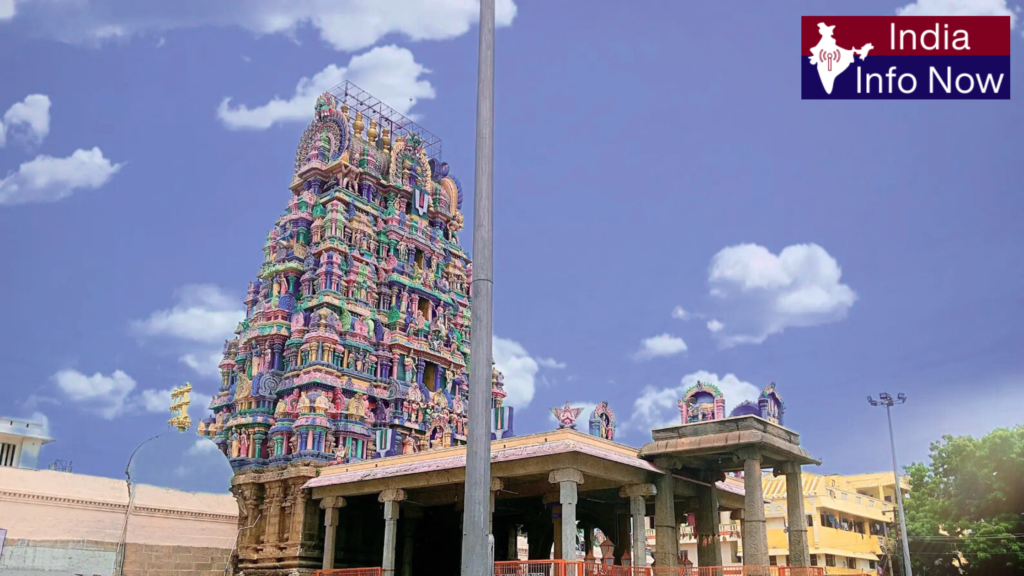
The Sri Adi Kesava Perumal Temple at Sriperumbudur is one of the most revered Vaishnavite temples in Tamil Nadu. Renowned for its majestic reclining form of Lord Vishnu and its close association with the great saint Sri Ramanujacharya, this ancient shrine attracts devotees and historians alike. The Sri Ramanujar temple stands as a remarkable symbol of South Indian architecture, spiritual heritage, and divine legends that span several centuries.
Sri Adi Kesava Perumal Temple History and Architecture
The origins of the Adi Kesava Perumal Temple date back to the Pallava period, and the architectural style of the temple reflects classic Pallava craftsmanship, marked by intricate stone carvings and balanced structural design.
Later, the temple was significantly developed by the Chola dynasty and subsequently renovated by the Vijayanagara kings. Historical inscriptions reveal that in 1572 AD, Srirangaraya I of the Vijayanagara dynasty undertook major renovation works to preserve and expand the temple complex.
Earlier, in 1556 AD, the renowned ruler Rama Raya generously donated 31 villages to the temple to support daily worship, rituals, and maintenance. This royal patronage played a crucial role in strengthening the temple’s economic and spiritual foundation.
One of the Sri Adi Kesava Perumal temple’s most striking features, the Golden Vimana (gold-plated tower above the sanctum), was added in 1912 AD, enhancing the grandeur of the sanctum sanctorum and giving the temple its iconic visual identity.
Main Deity and Temple Features: Sriperumpudur Temple
The presiding deity, Lord Vishnu, is worshipped here as Sri Adi Kesava Perumal in the reclining posture known as Bujanga Sayanam.
Key highlights include:
- The idol is 22 feet long, making it one of the largest reclining Vishnu forms in the region.
- Devotees must climb 18 steps to reach the sanctum and have darshan.
- The Lord’s head faces south, while His feet point north, a rare orientation in Vishnu temples.
Goddess Lakshmi is worshipped as Sri Pankajavalli Thayar and has a separate shrine within the temple complex. She faces east and uniquely holds a lotus in her left hand, unlike the traditional right-hand depiction seen in most temples.
Another architectural marvel of Sri Adi Kesava Perumal temple is the Otraikkal Mandapam, a hall carved out of a single massive stone, measuring approximately 18 feet wide and 3 feet high. This monolithic structure showcases the exceptional engineering skills of ancient Tamil artisans.
Sacred Traditions and Prasadam
A special ritual associated with the Adi Kesava Perumal temple is the Thirumanjanam (holy bath) of Sri Ramanujacharya. After this sacred ceremony, the cloth used to adorn the idol is distributed to devotees as prasadam. It is strongly believed that this blessed cloth has the power to cure diseases and remove long-standing ailments, drawing many pilgrims seeking healing and divine grace.
Adi Kesava Perumal Temple Timings and Darshan
| Details | Information |
|---|---|
|
Timings |
6:30 AM – 12:00 PM & 4:00 PM – 8:30 PM |
|
Entry Fee |
Free |
|
Special darshan |
₹25 per person |
|
Online booking |
Not available |
Sriperumbudur Temple Festivals and Important Occasions
The Adi Kesava Perumal temple, Sriperumpudur celebrates several major festivals with devotion and grandeur:
- Masi Pooram – February / March
- Panguni Uthiram – March / April
These festivals witness special poojas, processions, and large gatherings of devotees from across Tamil Nadu.
Sri Adi Kesava Perumal Temple Legends and Spiritual Significance
According to one legend, Lord Brahma once performed a grand yagna (fire ritual) at Kanchipuram without inviting his consort, Goddess Saraswati. Enraged by this disrespect, she transformed into the fierce River Vegavathi and attempted to flood the sacrificial site.
Terrified, Lord Brahma sought refuge in Lord Vishnu. Vishnu destroyed the demons sent by Saraswati and later assumed the powerful form of Ashtabhuja Perumal (the eight-armed form) to defeat a monstrous serpent sent to destroy the ritual. Thus, the yagna was saved, and Vishnu’s protective role became eternally celebrated in this region.
Legend of the Bhoota Ganas
Another ancient legend speaks of the Bhoota Ganas, the celestial attendants of Lord Shiva, who were cursed and lost their divine status. Seeking salvation, they approached Lord Vishnu.
Moved by compassion, Vishnu created a sacred spring in Kanchipuram through the serpent Anantha, appeared before them, and relieved them of their curse. Out of gratitude, the Bhoota Ganas built this temple in His honor.
Because of this event, the region came to be known as Bhoodhapuri, meaning “the city of the Bhootas.”
By Air
- Nearest airport: Chennai International Airport
- Distance: Approximately 39.2 km
By Train
- Direct trains are available from Chennai
- Suburban MMTS/local trains also connect Chennai with Sriperumbudur
By Road
- Located about 45 minutes from Porur, Chennai
- Easily accessible by bus, car, and taxi
Frequently Asked Questions
1. How old is the Adi Kesava Perumal Temple?
Sri Ramanujar temple dates back to the Pallava period, and was later expanded by the Cholas and renovated by the Vijayanagara kings in the 16th century.
2.What is special about the idol of Adi Kesava Perumal?
The idol is 22 feet long, placed in a reclining position with the head facing south and feet toward the north. Devotees climb 18 steps to have darshan.
3. . Who is the goddess worshipped here?
Goddess Lakshmi is worshipped as Sri Pankajavalli Thayar, enshrined in a separate shrine within the temple complex.
4.What is unique about Pankajavalli Thayar’s idol?
She holds a lotus in her left hand, which is rare compared to most depictions where the lotus is in the right hand.
Most Popular
-
 தினமும் முட்டை சாப்பிடலாமா? நன்மைகள், கொலஸ்ட்ரால் மற்றும் யாரெல்லாம் கவனமாக இருக்க வேண்டும்?
 -
 இரவில் சாப்பிடக்கூடாத உணவுகள் என்ன? தூக்கத்தை பாதிக்கும் 7 உணவுகள்
 -
 தினமும் நடப்பதால் ஏற்படும் மாற்றங்கள் | நடைப்பயிற்சி நன்மைகள்
 -
 காலை எழுந்தவுடன் தண்ணீர் குடிப்பது நல்லதா? முழு தகவல்
 -
 தேர்வு நேரத்தில் குழந்தைகளுக்கு கொடுக்க வேண்டிய 10 மூளை ஆரோக்கிய உணவுகள்