
Table of Contents
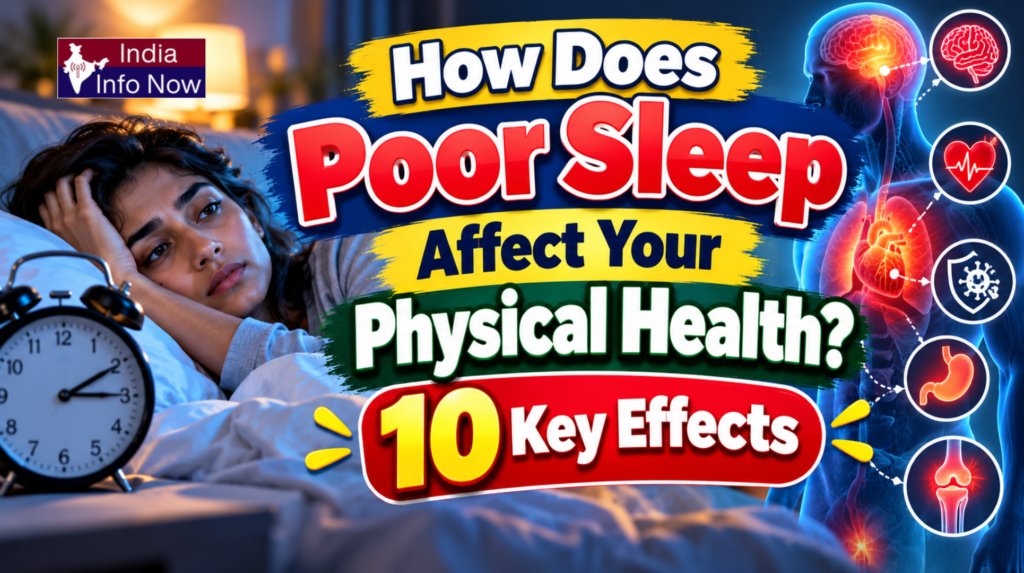
ToggleHow Does Poor Sleep Affect Your Physical Health? 10 Key Effects
1. Weakens the Immune System
Your immune system relies on adequate sleep to maintain normal function. During sleep, the body regulates immune signalling and supports processes that help it respond to infections.
Consistently getting too little sleep may make you more susceptible to respiratory infections and can affect recovery when you become ill.
Possible effects include:
Greater susceptibility to some infections.
Feeling tired during illness.
Slower recovery in some circumstances.
Reduced energy for everyday activities.
How to protect your health: Maintain a consistent sleep schedule, eat a balanced diet, stay hydrated, and follow recommended vaccinations. If you frequently experience infections or persistent fatigue, consult a healthcare professional.
2. Increases the Risk of Heart Problems
Quality sleep helps regulate blood pressure, heart rate, and other processes involved in cardiovascular health. During normal sleep, blood pressure typically falls for periods, allowing the cardiovascular system to rest.
Regularly getting insufficient sleep has been associated with a higher risk of high blood pressure, heart disease, and stroke.
Sleep problems such as obstructive sleep apnoea can also place additional strain on the cardiovascular system.
Warning signs to take seriously:
Persistent daytime tiredness.
Loud, frequent snoring.
Waking up gasping or choking.
Repeated morning headaches.
These symptoms do not automatically mean you have a heart condition, but breathing interruptions during sleep should be medically assessed.
3. Disrupts Blood Sugar Regulation
Sleep plays a role in how your body responds to insulin, the hormone that helps regulate blood glucose levels.
Repeatedly sleeping too little may reduce insulin sensitivity and interfere with normal glucose regulation. Over time, this can contribute to an increased risk of type 2 diabetes, particularly when combined with other risk factors.
Irregular sleep schedules and disrupted circadian rhythms may also affect metabolic health.
Healthy habits to consider:
Maintain consistent sleeping and waking times.
Avoid regularly sacrificing sleep for work or entertainment.
Stay physically active during the day.
Follow balanced eating habits.
Sleep is one part of diabetes prevention and management, alongside diet, activity, genetics, and other health factors.
4. Contributes to Weight Gain
Poor sleep can influence the hormones and brain processes involved in hunger, appetite, and food choices.
Sleep restriction may affect leptin and ghrelin, hormones associated with fullness and hunger. It can also increase cravings for energy-dense foods and leave you feeling too tired to exercise.
Over time, these changes may make weight management more difficult.
Signs that poor sleep may be affecting your routine include:
Feeling hungry more often.
Craving sugary or high-calorie snacks.
Skipping exercise because of tiredness.
Relying on caffeine to stay alert.
Practical tip: Prioritise adequate sleep, plan balanced meals, and choose enjoyable physical activities. Avoid treating sleep as a replacement for healthy eating or exercise; all three contribute to overall wellbeing.
5. Affects Brain Function and Decision-Making
Sleep helps the brain process information, strengthen memories, and prepare for the next day. Poor sleep can interfere with attention, learning, reaction time, and decision-making.
When you are sleep-deprived, everyday tasks may feel more difficult, and you may become more likely to make mistakes.
Common effects include:
Difficulty concentrating.
Forgetfulness.
Slower reaction times.
Reduced productivity.
Poor judgement and impulsive decisions.
These effects can be particularly dangerous when driving, operating machinery, or performing tasks that require constant attention.
What you can do: Avoid driving when excessively sleepy. Take persistent concentration problems seriously and review whether your sleep duration, schedule, or quality needs improvement.
6. Affects Mental Health and Emotional Wellbeing
Physical and mental health are closely connected to sleep. Insufficient sleep can make it harder to manage stress and regulate emotions.
People who sleep poorly may experience increased irritability, low motivation, anxiety symptoms, or difficulty coping with everyday challenges. Persistent sleep problems and depression can also influence each other.
Helpful strategies include:
Keeping a regular sleep schedule.
Spending time outdoors during the day.
Exercising regularly.
Reducing stimulating activities before bedtime.
Seeking support when stress or low mood persists.
If sleep difficulties occur alongside ongoing anxiety or depression, speak with a qualified healthcare professional.
7. Affects Muscle Recovery and Physical Performance
Sleep supports the recovery processes that follow physical activity. During sleep, the body regulates hormones and carries out cellular processes involved in tissue maintenance and repair.
Insufficient sleep can leave you feeling less energetic and may affect endurance, coordination, reaction time, and exercise performance.
People who train regularly may also find it harder to recover when sleep is consistently inadequate.
To support recovery:
Allow enough time for sleep after demanding activities.
Eat adequate protein and balanced meals.
Stay hydrated.
Include rest and recovery days in your exercise routine.
Avoid intense exercise too close to bedtime if it makes falling asleep difficult.
8. May Affect Digestion and Appetite
Sleep and digestive health are connected through hormones, the nervous system, daily routines, and metabolism.
Poor sleep may influence appetite, food choices, and the timing of meals. Eating late at night may also worsen symptoms of acid reflux in some people, particularly when lying down soon after eating.
The relationship between sleep and digestive problems varies from person to person.
Practical tips:
Eat regular, balanced meals.
Avoid large meals immediately before bed.
Limit late-evening caffeine.
Seek advice if you regularly experience heartburn, abdominal discomfort, or persistent digestive symptoms.
Improving sleep may help your routine, but ongoing digestive symptoms may require separate evaluation.
9. Can Worsen Existing Respiratory Problems
Sleep and breathing influence each other. Conditions such as asthma and obstructive sleep apnoea can disrupt sleep, while inadequate sleep may affect the body’s normal responses to illness and inflammation.
Obstructive sleep apnoea causes repeated interruptions in breathing during sleep and can lead to poor-quality rest even when a person spends many hours in bed.
Possible warning signs include:
Loud, frequent snoring.
Pauses in breathing noticed by another person.
Waking up gasping for air.
Excessive daytime sleepiness.
If you experience these symptoms, seek medical assessment. Sleep apnoea is treatable, and appropriate care can improve sleep quality and reduce associated health risks.
10. Affects Children's and Teenagers' Growth and Behaviour
Children and teenagers need sufficient sleep for healthy development, learning, emotional regulation, and physical wellbeing.
When young people do not get enough sleep, they may become irritable, impulsive, unusually active, or have difficulty paying attention. Their school performance and motivation may also suffer.
Sleep supports normal growth and development, although growth is influenced by many factors, including genetics, nutrition, and overall health.
Parents can help by:
Maintaining consistent bedtime routines.
Encouraging relaxing activities before bed.
Keeping electronic devices out of the sleeping area when practical.
Ensuring children have enough time to sleep.
Discussing persistent snoring or sleep difficulties with a healthcare professional.
General sleep-duration recommendations are approximately 9–12 hours for children aged 6–12, 8–10 hours for teenagers aged 13–18, and at least 7 hours for most adults aged 18–60. Individual needs vary by age and circumstances.
How Can You Improve Sleep Quality?
Better sleep often begins with small, consistent changes.
1. Follow a Consistent Sleep Schedule
Go to bed and wake up at approximately the same time every day, including weekends. Regular timing helps support your body’s internal clock.
2. Create a Comfortable Bedroom
Keep your bedroom dark, quiet, and comfortably cool. Choose bedding that supports restful sleep and minimise unnecessary noise.
3. Reduce Screen Use Before Bed
Phones, computers, and television can delay bedtime and keep you mentally stimulated. Try a relaxing, screen-free activity before sleeping.
4. Limit Caffeine Later in the Day
Coffee, tea, energy drinks, and some soft drinks contain caffeine. Its effects can last for several hours, so consider avoiding it during the afternoon and evening if it affects your sleep.
5. Exercise Regularly
Physical activity supports overall health and may improve sleep quality. Choose a routine that suits your fitness level and avoid vigorous activity close to bedtime if it makes you feel more alert.
6. Manage Stress
Relaxation techniques, gentle stretching, reading, and slow breathing may help you unwind. If racing thoughts regularly prevent sleep, consider speaking with a healthcare professional.
7. Know When to Seek Help
Consult a healthcare professional if you regularly struggle to fall asleep, wake frequently, feel exhausted despite adequate time in bed, or experience loud snoring and breathing interruptions.
Persistent insomnia may benefit from cognitive behavioural therapy for insomnia (CBT-I), an evidence-based treatment. Do not rely on sleeping pills or alcohol without appropriate medical guidance.
Conclusion
Poor sleep affects much more than your energy levels the next morning. When sleep deprivation becomes a regular pattern, it can influence immune function, cardiovascular health, blood sugar regulation, appetite, brain performance, emotional wellbeing, and physical recovery.
The good news is that healthy sleep habits can make a meaningful difference. Maintaining a consistent routine, limiting late-day caffeine, creating a comfortable sleeping environment, and seeking help for persistent sleep problems are important steps towards better health.
Frequently Asked Questions
1. What are the common physical effects of poor sleep?
Poor sleep can cause tiredness, slower reaction times, reduced concentration, increased appetite, and impaired exercise performance. Chronic insufficient sleep is also associated with a higher risk of certain long-term health conditions.
2. Can lack of sleep weaken the immune system?
Insufficient sleep can affect normal immune function and may increase susceptibility to some infections.
3. Can poor sleep cause weight gain?
Poor sleep may affect appetite, food choices, energy levels, and physical activity, making weight management more difficult.
4. How many hours of sleep do adults need?
Most adults aged 18–60 should regularly get at least seven hours of sleep per night. Individual needs vary, and older adults and teenagers have different recommendations.
Most Popular
-
 தீபாவளி அன்று பட்டாசு வெடிக்கும் பழக்கம் எப்போது தொடங்கியது? | பட்டாசுகளின் வரலாறு
-
 தீபாவளிக்கும் வணிகர்களின் கணக்குப் புத்தகங்களுக்கும் என்ன தொடர்பு? | சோப்டா பூஜை விளக்கம்
-
 சுற்றுச்சூழலுக்கு பாதிப்பு இல்லாமல் தீபாவளி கொண்டாடுவது எப்படி? – 15 வழிமுறைகள்
-
 தீபாவளியின்போது உணவு விஷமாதலைத் தவிர்ப்பது எப்படி? – 15 பாதுகாப்பு வழிமுறைகள்
-
 தீபாவளி அன்று ஏன் புத்தாடை அணிய வேண்டும்? | ஆன்மீக மற்றும் பாரம்பரிய காரணங்கள்