
Table of Contents
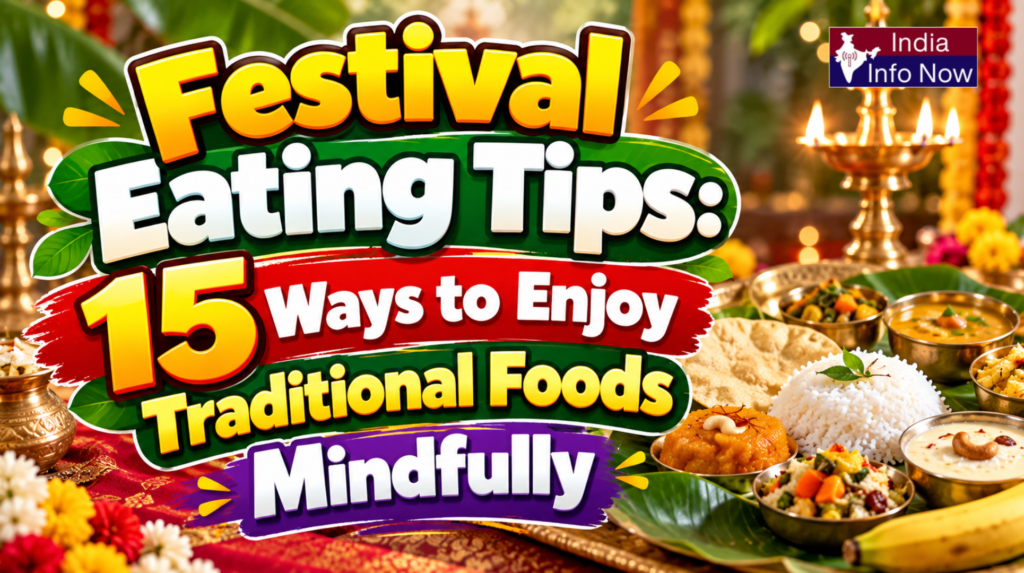
ToggleFestival Eating Tips: 15 Ways to Enjoy Traditional Foods Mindfully
1. Eat Mindfully and Avoid Distractions
During festivals, people often eat while watching television, scrolling through their phones, or talking continuously. Although socialising is part of the celebration, distractions can make it harder to notice how much you are eating.
Try to create a relaxed environment during meals. Put your phone aside, reduce screen time, and pay attention to the food in front of you. Notice its aroma, colour, texture, and flavour. Eating with awareness helps you appreciate traditional recipes and recognise when you feel comfortably satisfied.
Mindful eating is not about following strict rules. It is about enjoying food with greater attention and making choices that feel right for your body.
2. Practise Portion Control Without Giving Up Your Favourites
Traditional festival meals often include several dishes, sweets, snacks, and beverages. Trying everything in large quantities can leave you feeling uncomfortable.
Instead, begin with smaller servings of the dishes you genuinely enjoy. Use a smaller plate if it helps you manage portions, and take your time before deciding whether you want another serving. You can always return for more if you are still hungry.
For example, enjoy a small serving of your favourite sweet alongside a balanced meal rather than eating several sweets simply because they are available. Portion control should help you enjoy a variety of foods, not make you feel deprived.
3. Listen to Your Body's Hunger and Fullness Signals
Festive gatherings can encourage people to keep eating long after they are hungry. Sometimes, this happens because food is readily available, while at other times, social pressure or emotional memories influence our choices.
Before taking another serving, pause and ask yourself whether you are physically hungry or eating because everyone else is eating. Notice whether you feel satisfied, comfortably full, or uncomfortably stuffed.
There is no need to judge yourself for enjoying extra food occasionally. The aim is simply to become more aware of your eating habits and respond to your body’s signals.
4. Never Skip Meals Before a Festival Feast
Skipping breakfast or lunch to save calories for a large festive dinner may seem like a sensible strategy, but it can leave you extremely hungry by the time the meal begins. When hunger becomes intense, it may be harder to eat slowly and make thoughtful choices.
Maintain your regular meal schedule as much as possible. If you are attending an evening celebration, have balanced meals earlier in the day and consider a light snack if you need one.
Options such as fruit, yoghurt, nuts, or wholegrain snacks can help manage hunger before the event. Arriving comfortably hungry rather than starving makes it easier to enjoy the meal at a relaxed pace.
You do not need to replace every traditional dish with a healthier alternative. Instead, aim for balance across your plate.
Include a variety of foods such as:
Vegetables and salads for fibre, vitamins, and minerals.
Protein-rich foods such as lentils, beans, eggs, fish, or lean meat.
Whole grains where available, such as brown rice or whole-wheat preparations.
Traditional dishes and sweets that you particularly enjoy.
For example, at a festive lunch, you might enjoy rice, vegetables, dal, a favourite curry, and a small portion of dessert. A balanced meal allows you to enjoy cultural traditions while including a range of nutrients.
Sweets are often the highlight of festivals. Laddoos, payasam, gulab jamun, kaju katli, plum cake, and other delicacies are closely connected with celebrations and family memories.
Rather than completely avoiding desserts, choose the ones you truly love and savour them slowly. You could share a larger dessert with family members, select a smaller piece, or enjoy one favourite sweet instead of sampling every option.
Homemade sweets can also be prepared with suitable adjustments, such as reducing added sugar or serving smaller portions. However, remember that ingredients and preparation methods vary, and homemade foods are not automatically lower in calories or sugar.
The goal is to enjoy sweets as part of the celebration without feeling pressured to eat more than you want.
7. Make Thoughtful Choices About Fried and Rich Foods
Festival menus often feature fried snacks, creamy curries, rich gravies, and savoury treats. These foods can be enjoyed, but eating large amounts of them in one sitting may leave you feeling overly full.
Choose the dishes that matter most to you and balance richer options with vegetables, pulses, or lighter preparations. If you are preparing food at home, consider baking, grilling, steaming, or using less oil where suitable.
You do not have to reject every fried snack offered by a friend or relative. Enjoy a reasonable portion, eat slowly, and pay attention to how you feel.
8. Stay Hydrated Throughout the Day
Busy celebrations can make it easy to forget to drink enough water. Keeping water accessible and drinking regularly throughout the day can support normal bodily functions and help prevent dehydration.
Water is a good everyday choice. Unsweetened beverages can also be included according to your preferences. If you enjoy festive drinks, be mindful of added sugars and serving sizes.
Hydration needs vary depending on activity, climate, and individual health. Rather than following a rigid water target, pay attention to your thirst and your circumstances. People who have been advised to restrict fluids for medical reasons should follow their healthcare professional’s guidance.
9. Be Mindful of Sugary Drinks and Alcohol
Sweetened juices, fizzy drinks, festive punches, and speciality beverages can contribute significant amounts of added sugar. Alcohol may also affect judgement and can add to overall energy intake.
Choose water or unsweetened drinks more often, and enjoy sweet beverages in moderate portions. If you drink alcohol, follow applicable health guidance and legal requirements; avoiding alcohol is the lowest-risk option for alcohol-related harm.
Making thoughtful beverage choices helps you enjoy the celebration without relying on sugary drinks throughout the day.
10. Avoid Eating Out of Social Pressure
At family gatherings, hosts may lovingly encourage guests to eat more. Comments such as “Just one more serving” or “I made this especially for you” often come from affection, but you do not have to eat beyond your comfort level to show appreciation.
You can thank the host, compliment the food, and politely decline another serving. For example, say, “This is delicious, thank you. I’m comfortably full, so I’ll save some for later.”
Remember that enjoying a meal is not measured by how much you eat. Spending time together, appreciating the effort behind the dishes, and sharing memories are equally important parts of a celebration.
11. Choose Snacks with Care
Festive snacks are often served throughout the day, making it easy to eat continuously without noticing how much you have consumed.
When you feel hungry between meals, choose snacks that provide useful nutrients and satisfy your appetite. Fresh fruit, nuts, yoghurt, roasted chickpeas, or wholegrain snacks are practical options, depending on your dietary needs.
If you want traditional savoury snacks, enjoy them intentionally and serve a portion rather than repeatedly reaching into a large container. This simple habit can make snacking more conscious and enjoyable.
12. Plan Ahead for Festive Meals
A little planning can help you enjoy a celebration without feeling overwhelmed by the food choices available.
If you are attending a gathering, find out what will be served when possible. Think about the foods you most want to enjoy, maintain your usual meal routine, and avoid arriving excessively hungry.
At home, prepare a balanced menu that includes vegetables, protein-rich dishes, staple foods, and traditional favourites. You can also prepare suitable portions in advance and store leftovers safely.
Planning is not about controlling every bite. It is about creating an environment where you can enjoy food comfortably and make choices that suit your needs.
13. Appreciate the Story Behind Every Dish
Traditional festival foods often represent more than taste. A family recipe passed down through generations may carry memories of grandparents, childhood celebrations, or special moments spent cooking together.
Take time to appreciate the ingredients, preparation, and cultural meaning behind your meal. Ask family members about recipes, help prepare traditional dishes, and share stories around the table.
Mindful eating encourages you to celebrate the entire experience, not just the quantity of food consumed. When you slow down and connect with the people around you, meals can become more meaningful and satisfying.
14. Return to Your Normal Routine After the Celebration
One festive meal or an occasional indulgence does not define your overall eating habits. If you eat more than you intended, avoid punishing yourself by skipping meals, fasting for long periods, or exercising excessively to compensate.
Instead, return to your usual balanced meals, drink water regularly, get adequate sleep, and enjoy your normal physical activities. A gentle walk after a meal may be enjoyable if it suits your health and comfort, but exercise should not be treated as a punishment for eating.
Consistency over time matters more than achieving perfection during every celebration.
15. Consider Your Individual Health Needs
Not every festive food is suitable for everyone. People managing diabetes, food allergies, coeliac disease, digestive conditions, or other health concerns may need to make specific adjustments.
Check ingredient labels when necessary, ask about food preparation, and be mindful of possible cross-contact with allergens. If you have dietary restrictions or have been given medical nutrition advice, follow the guidance appropriate to your condition.
Traditional foods can often be enjoyed with thoughtful planning, but personal health needs should always take priority.
Final Thoughts
Festivals are meant to bring happiness, connection, and memorable experiences. Healthy festival eating does not require you to give up traditional delicacies or calculate every calorie. It means enjoying your favourite foods with awareness, choosing comfortable portions, staying hydrated, and listening to your body.
Eat slowly, appreciate the flavours, respect your hunger and fullness cues, and make room for the foods that hold special meaning for you. Avoid skipping meals or feeling guilty about occasional indulgences. Most importantly, remember that the joy of a festival comes from more than what is on the plate.
Celebrate the traditions, savour every bite, and enjoy festive food mindfully—without unnecessary guilt.
Frequently Asked Questions
1. What are the best festival eating tips for staying healthy?
The best festival eating tips include eating slowly, choosing comfortable portions, staying hydrated, maintaining regular meals, balancing richer foods with vegetables and protein-rich dishes, and enjoying your favourite treats mindfully.
2. How can I avoid overeating during festivals?
Avoid skipping meals before celebrations, begin with smaller servings, eat without distractions, and pause before taking another portion. Pay attention to your hunger and fullness signals rather than eating simply because food is available.
3. Can I eat sweets during festivals and still maintain a healthy diet?
Yes. You can enjoy traditional sweets in moderate portions as part of an overall balanced eating pattern. Choose the sweets you enjoy most, savour them slowly, and avoid feeling that you must either eat everything or avoid sweets completely.
4. What is mindful eating during festivals?
Mindful eating means paying attention to the taste, aroma, texture, and appearance of food while recognising your hunger and fullness cues. It helps you appreciate traditional dishes and make more conscious food choices.
Most Popular
-
 Festival Eating Tips: 15 Ways to Enjoy Traditional Foods Mindfully
-
 12 Essential Winter Health Tips to Keep Your Family Healthy
-
 15 Monsoon Health Tips to Stay Safe During the Rainy Season
-
 Diwali Health Tips for Senior Citizens: 15 Safety Tips for a Happy Festival
-
 15 Easy Diwali Decoration Ideas to Make Your Home Look Beautiful