
Table of Contents
ToggleDiwali 2026: 15 Interesting Facts You Should Know About the Festival
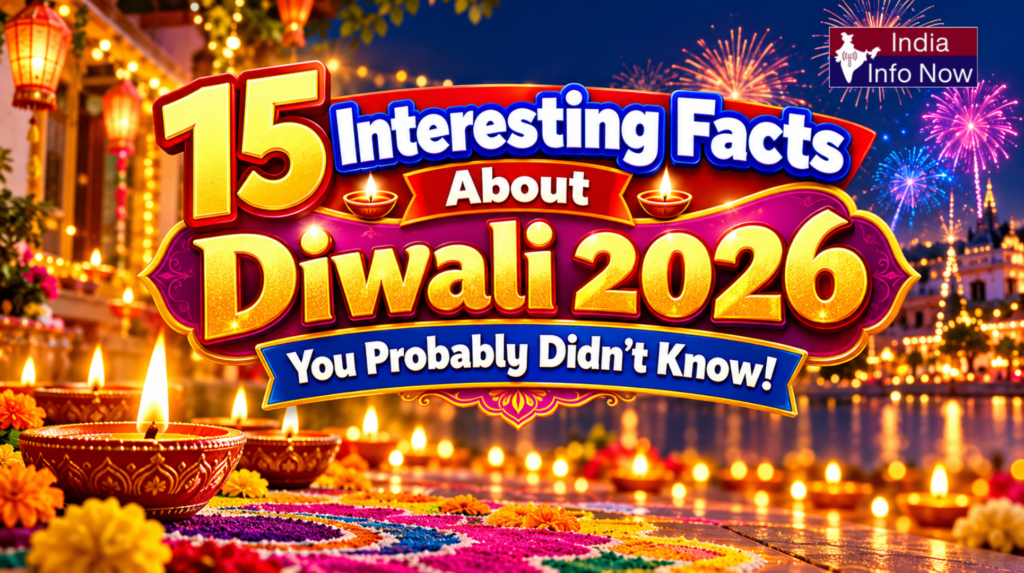
1. Diwali Means a Row of Lights
The word Deepavali comes from Sanskrit and is commonly understood to mean “a row of lights.” The name reflects one of the festival’s most recognizable traditions: lighting small oil lamps called diyas.
Homes, temples, courtyards, and streets are decorated with lamps, candles, and electric lights during the festival. These lights symbolize hope, positivity, and the triumph of good over evil. Many families continue the tradition of lighting diyas at their doorways and windows as part of their Diwali celebrations.
2. Diwali Is Celebrated Over Several Days
Diwali is not always a single-day celebration. In many parts of India, it is observed over five days, with each day having its own customs and significance.
The commonly recognized five-day sequence includes Dhanteras, Naraka Chaturdashi or Choti Diwali, Lakshmi Puja on the main Diwali day, Govardhan Puja, and Bhai Dooj. However, the names, order, and importance of particular observances may differ by region and community.
These celebrations include shopping, cleaning homes, worship, preparing festive food, visiting relatives, and exchanging gifts.
3. The Date of Diwali Changes Every Year
Diwali follows the Hindu lunisolar calendar, so its date changes on the Gregorian calendar each year. The main festival is generally observed during October or November, around the new-moon day of the Hindu lunar month of Kartika.
For Diwali 2026, check a trusted regional panchang for the main festival date and Lakshmi Puja muhurat. Local traditions and the calculation of lunar days can affect the observance, so it is useful to consult a calendar specific to your location.
4. Diwali Is Associated with Goddess Lakshmi
For many Hindus, Diwali is closely associated with Goddess Lakshmi, the goddess of wealth, prosperity, and good fortune.
Families clean and decorate their homes before performing Lakshmi Puja. Diyas, flowers, rangoli, and other decorations form part of many households’ preparations. Worshippers pray for well-being, financial stability, peace, and prosperity in the coming year.
The festival also offers a reminder that prosperity is not only about money but can include good health, strong relationships, generosity, and contentment.
In many parts of northern India, Diwali is associated with the return of Lord Rama, Goddess Sita, and Lakshmana to Ayodhya after Rama’s fourteen years of exile and his victory over Ravana.
According to the Ramayana tradition, the people of Ayodhya welcomed Rama and Sita with rows of lamps. Lighting diyas during Diwali is often connected with this story of homecoming, hope, and the restoration of righteousness.
This is one of the best-known explanations for the festival, although other regions and religious communities observe Diwali through different stories and traditions.
In several southern Indian traditions, Diwali is associated with Lord Krishna’s defeat of the demon king Narakasura. This victory symbolizes the destruction of evil and the restoration of justice.
Naraka Chaturdashi, often observed on the day before the main Diwali celebration in many regions, is linked to this story. Families may mark the occasion with an early-morning oil bath, new clothes, prayers, and festive meals, depending on local custom.
This regional tradition shows how one festival can carry different but related meanings throughout India.
7. Goddess Kali Is Worshipped During Diwali in Bengal
In Bengal and some other eastern Indian communities, Diwali coincides with Kali Puja, dedicated to Goddess Kali.
Kali is associated with the destruction of evil, the removal of negative forces, and the protection of devotees. During Kali Puja, worshippers visit decorated temples and perform rituals at home. The celebration can include flowers, lamps, devotional offerings, and community gatherings.
The prominence of Kali Puja highlights the diversity of Diwali traditions and the different forms of divine power honored across India.
8. Rangoli Is More Than a Decoration
Rangoli is a traditional art form created at entrances, courtyards, and other spaces in the home. Designs may be made using colored powders, rice flour, flower petals, or other materials.
During Diwali, rangoli often features geometric patterns, flowers, diyas, and auspicious symbols. Many families create these designs to welcome guests and express wishes for good fortune.
Rangoli styles differ by region. Related traditions include kolam in Tamil Nadu and other forms of decorative floor art across India. Creating rangoli can also be a family activity that brings different generations together.
9. Diwali Is Celebrated by More Than One Religion
Although Diwali is widely recognized as a major Hindu festival, it also has important meanings for other religious communities.
Jains: Diwali commemorates the nirvana, or liberation, of Lord Mahavira, the twenty-fourth Tirthankara.
Sikhs: Diwali coincides with Bandi Chhor Divas, which celebrates Guru Hargobind’s release from imprisonment and his return to Amritsar, alongside the release of other prisoners in the traditional account.
Some Buddhist communities: Diwali-related observances and stories may be part of local cultural traditions, but there is no single universal Buddhist Diwali celebration.
These different observances demonstrate the festival season’s diverse religious and cultural significance.
10. Cleaning the Home Is an Important Tradition
Many families thoroughly clean their homes before Diwali. This preparation is practical as well as symbolic: it makes space for guests, decorations, prayers, and family gatherings.
Homes may be repainted, reorganized, or decorated with lights, torans, flowers, and festive ornaments. In households observing Lakshmi Puja, cleanliness is also traditionally associated with welcoming prosperity and auspicious beginnings.
Diwali cleaning is a good opportunity to donate unused belongings, organize cupboards, and create a fresh and comfortable living space.
11. New Clothes and Gifts Are Part of the Celebration
Wearing new clothes is a popular Diwali custom. Families often choose traditional outfits or festive clothing for prayers, visits, and gatherings.
Gift-giving is another familiar tradition. People exchange sweets, dry fruits, clothing, decorative items, and thoughtful presents with relatives, friends, neighbors, and colleagues. Businesses may also distribute festive gifts to employees and customers.
A meaningful gift does not need to be expensive. Homemade sweets, reusable products, and personalized gifts can make celebrations memorable while keeping spending under control.
12. Traditional Diwali Food Varies Across India
Diwali celebrations often include special meals, snacks, and sweets. Popular foods differ according to local culture and family traditions.
In Tamil Nadu, festive preparations may include adhirasam, murukku, mixture, and other homemade snacks. Other regions are known for sweets such as ladoo, barfi, kaju katli, and gulab jamun.
Families often prepare food to share with guests and offer during religious observances. If you are preparing a large festive menu, storing food safely and enjoying sweets in moderation can help make the celebration more comfortable.
13. Dhanteras Is Associated with Prosperity and Traditional Shopping
Dhanteras marks the beginning of the commonly observed five-day Diwali festival. Many people buy gold, silver, utensils, or other household items as a traditional expression of prosperity and good fortune.
The day is associated with Dhanvantari in Hindu tradition, and some observances also honor wealth and well-being. Shopping customs vary, and buying precious metals is not a requirement for celebrating the festival.
If you plan to buy gold or silver in 2026, compare prices, check purity and hallmark details where applicable, and choose purchases that fit your budget.
14. Diwali Has a Strong Connection with New Beginnings
Diwali is often a time to reflect on the year, strengthen family relationships, and begin new activities with optimism. In some communities, the period is associated with the start of a new financial or business year.
Merchants may perform account-book puja, while families make plans for savings, household improvements, or future goals. These practices differ by region and community.
The broader message of new beginnings can be celebrated by setting realistic goals, reviewing finances, helping others, and making time for meaningful relationships.
15. Eco-Friendly Diwali Celebrations Are Becoming More Important
Diwali can be celebrated in ways that reduce waste and limit pollution. Firecracker smoke can worsen air quality, while loud fireworks may disturb infants, older adults, pets, and people sensitive to noise.
Consider these simple ideas for a more environmentally conscious Diwali:
Use reusable decorations and energy-efficient lighting.
Choose locally made products and avoid unnecessary packaging.
Reuse rangoli stencils or use natural decorative materials.
Share homemade gifts and sweets in reusable containers.
Follow local rules on fireworks and avoid disturbing people and animals.
Dispose of waste responsibly after celebrations.
Small choices can help preserve the joy of Diwali while making celebrations safer and more considerate of the environment.
Conclusion
Diwali is much more than a festival of lamps. It brings together stories of courage and righteousness, worship, family traditions, regional foods, decorative arts, and hopes for a prosperous future.
Whether you celebrate the return of Lord Rama, Lord Krishna’s victory over Narakasura, Goddess Lakshmi’s blessings, Kali Puja, or another tradition connected with the season, Diwali offers an opportunity to reflect on light, kindness, and new beginnings.
As you prepare for Diwali 2026, learn about your family’s traditions, celebrate thoughtfully, share happiness with others, and make safety and sustainability part of your plans.
Wishing you and your family a happy, peaceful, and prosperous Diwali 2026!
Frequently Asked Questions
1. What is Diwali, and why is it celebrated?
Diwali, also known as Deepavali, is the Festival of Lights. It symbolizes the victory of good over evil, light over darkness, and knowledge over ignorance.
2. When is Diwali in 2026?
Diwali 2026 falls in the October–November festival season. Check a reliable regional Hindu calendar for the exact main celebration date and Lakshmi Puja timings.
3. What does the word Diwali mean?
The word Deepavali comes from Sanskrit and means “row of lights,” referring to the traditional oil lamps called diyas.
4. Why are diyas lit during Diwali?
Diyas symbolize hope, positivity, prosperity, and the triumph of light over darkness. They are also associated with welcoming auspiciousness into the home.
Most Popular
-
 12 Travel Health Tips for a Comfortable and Healthy Trip
-
 Festival Eating Tips: 15 Ways to Enjoy Traditional Foods Mindfully
-
 12 Essential Winter Health Tips to Keep Your Family Healthy
-
 15 Monsoon Health Tips to Stay Safe During the Rainy Season
-
 Diwali Health Tips for Senior Citizens: 15 Safety Tips for a Happy Festival