
Table of Contents
ToggleThirumalai Kumaraswamy Temple (Thirumalai Murugan Temple) – Timings, How to Reach, Location
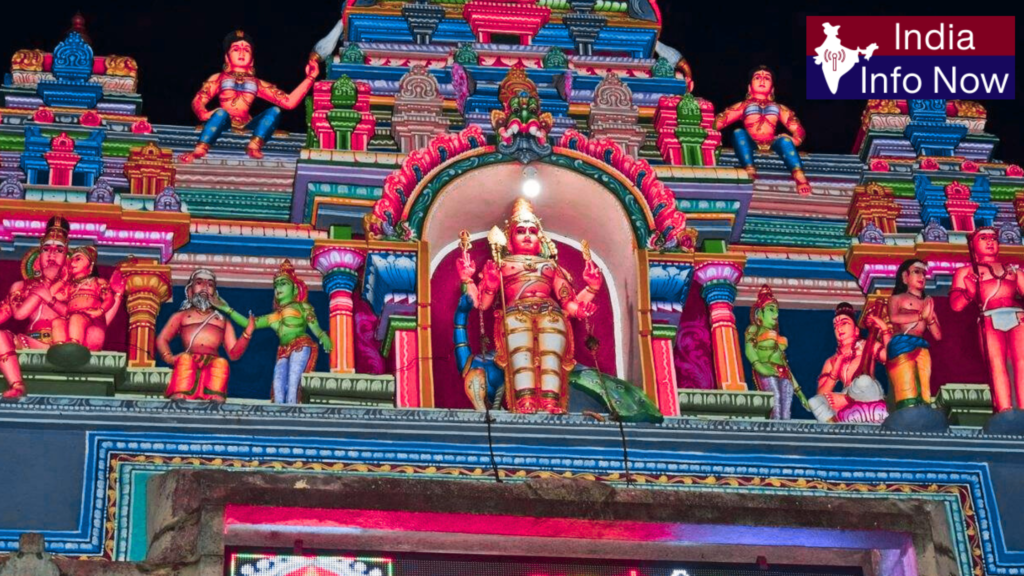
Overview of the Temple
Thirumalai Kumaraswamy Temple, popularly known as Thirumalai Murugan Temple, is a revered hilltop shrine located at Panpoli near Sengottai, in the Tenkasi district of Tamil Nadu. Nestled in the scenic folds of the Western Ghats at an elevation of about 330 meters above sea level, the temple offers a unique blend of spiritual tranquility, historical depth, and natural beauty.
Surrounded by lush greenery, cool mountain air, and panoramic landscapes, the temple stands as one of the important pilgrimage destinations for devotees of Lord Murugan. It is also admired as a fine example of traditional South Indian hill temple architecture, harmoniously integrated with its natural surroundings.
Spiritual Significance of Theerthagiri and Sacred Springs
The hill on which the Thirumalain Murugan temple is situated is known as Theerthagiri, believed to be a sacred land where great siddhars (enlightened sages) performed intense penance. The temple is especially renowned for its holy water source called “Poonchunai Theertham”, a sacred spring that holds immense spiritual importance.
According to legend, Sage Agastya created this holy spring for performing the abhishekam (ritual bathing) of Lord Murugan. Within the spring are three natural pits, named after the Sun (Surya), Moon (Chandra), and Fire (Agni). It is believed that these pits always remain filled with water throughout the year. Devotees say that whenever the water level reduces, rainfall occurs naturally to refill them, symbolizing divine protection.
In ancient times, it is said that a single blue lily flower bloomed daily in this spring, which the Saptha Kanniyars (Seven Divine Virgins) would offer to Lord Murugan during worship.
Bathing in this sacred spring before darshan is considered highly auspicious. Devotees believe it purifies the soul, removes sins, heals ailments, and helps overcome karmic obstacles. Lord Murugan here is worshipped as a compassionate deity who bestows peace, prosperity, spiritual growth, and good health.
Unique Legend of “Mookan” Murugan
A fascinating legend associated with Thirumalai Kumaraswamy Temple states that when the idol of Lord Murugan was discovered and excavated from an anthill (putru), it was accidentally touched by a crowbar, causing a small mark on the deity’s nose. Instead of diminishing the beauty of the idol, this scar was believed to enhance its divine charm.
Because of this, Lord Murugan of Thirumalai is affectionately called “Mookan” Murugan (the Lord with the sacred nose mark).
Due to this belief, local traditions evolved where male children born in the region are often named Mookan or Mookandi, while female children are named Mookammal. Devotees also follow the custom of performing nose-piercing ceremonies for children after praying to this Murugan, seeking divine blessings for good health and protection.
Thirumalai Kumaraswamy Temple strictly follows the sacred ritual system known as “Devi Prasanna Kumara Vidhi”, believed to have been taught directly by Goddess Parvati to Lord Murugan. Based on this divine method, eight kaala poojas (eight daily rituals) are performed with great devotion.
One of the most unique features of this temple is its Palliyarai (night resting) pooja. Unlike most Murugan temples where the symbolic sandals (padukas) of the deity are taken to the resting chamber, here the rituals are performed directly to the main deity (Moolavar). Milk and fruits are offered as naivedyam, followed by a special Sayana Pooja (sleep ritual), making this practice rare and spiritually significant.
Thirumalai Murugan Temple Timings:
- Morning: 6:00 AM to 12:30 PM
- Evening: 4:00 PM to 8:30 PM
- Special Dharshan: tickets are available at the temple ticket counter
- Entrance Fee: Free
The temple hosts several vibrant festivals throughout the year:
- Thai Poosam – Features grand Kavadi processions, abhishekams, and thousands of devotees undertaking vows.
- Vaikasi Visakam – Celebrates the birth star of Lord Murugan with special rituals.
- Skanda Sashti—A six-day festival commemorating Murugan’s victory over Surapadman.
- Karthigai Float Festival – Spectacular lamp-lit processions held in the temple tank.
- Chithirai Step Festival—Celebrated on the first day of the Tamil month Chithirai with special hill rituals.
During these festivals, the Thirumalai Murugan temple transforms into a hub of devotion, music, and spiritual energy.
Modern Developments and Accessibility
In 2019, a magnificent five-tier Rajagopuram (eastern entrance tower) was newly constructed, along with several renovation works. A grand Kumbabishekam (consecration ceremony) was performed, further enhancing the temple’s spiritual grandeur.
Earlier, devotees had to climb 544 steps to reach the hilltop shrine. While the steps still exist for those who prefer traditional pilgrimage on foot, a motorable road has now been developed, allowing vehicles to reach the Thirumalai Murugan temple easily. This improvement has made the temple accessible to elderly devotees and families with ease.
Darshan Facilities
For the convenience of pilgrims, special darshan tickets are available at the temple ticket counter, especially useful during weekends and festival seasons.
Conclusion
Thirumalai Kumaraswamy Temple is not just a place of worship but a powerful spiritual destination where mythology, devotion, nature, and tradition unite. With its sacred springs, rare rituals, ancient legends, and breathtaking hilltop location, the temple offers devotees a deeply cleansing and uplifting pilgrimage experience.
Frequently Asked Questions
1. Why is Lord Murugan called “Mookan” here?
According to legend, when the idol was excavated from an anthill, a small mark appeared on the deity’s nose due to a tool. Devotees believe this mark adds divine beauty, and hence the Lord is lovingly called Mookan Murugan.
2. What is Theerthagiri?
Theerthagiri is the sacred hill on which the temple is located. It is believed that ancient siddhars performed penance here, making it a powerful spiritual center.
3. What is Poonchunai Theertham?
Poonchunai Theertham is the holy spring near the temple, believed to have been created by Sage Agastya. It contains three natural pits associated with the Sun, Moon, and Fire gods and is considered highly sacred for purification and healing.
4. Do devotees bathe in the sacred spring?
Yes. Many devotees take a ritual bath in Poonchunai Theertham before visiting the temple, believing it removes sins and grants spiritual renewal.
Most Popular
-
 Gold Price Today (28th March 2026): 10g 24K & 22K Gold Rate in India
 -
 Silver Price Today (28th March 2026): 1g 10g Silver Rate in India
 -
 Silver Price Today (23rd March 2026): 1g 10g Silver Rate in India
 -
 Gold Price Today (23rd March 2026): 10g 24K & 22K Gold Rate in India
 -
 Gold Price Today (21st March 2026): 10g 24K & 22K Gold Rate in India