
Table of Contents
ToggleThiru Ilanji Kumarar Temple, Ilanji – Timings, How to Reach, Location
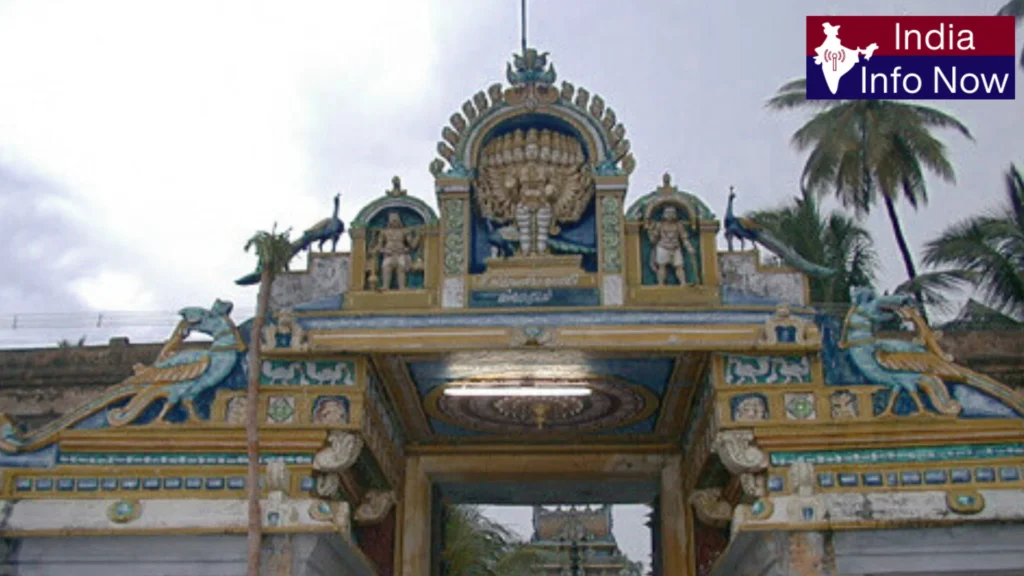
The Thiru Ilanji Kumarar Temple, located at Ilanji near Courtallam in Tamil Nadu, is a highly revered shrine dedicated to Lord Muruga. This sacred place finds special mention in the Tiruppugazh hymns of Saint Arunagirinathar, who praised the deity as Thiru Ilanji Kumaran, residing in a land blessed with flowing rivers and blooming lotus ponds.
Ilanji, also known as Mahilam, is a spiritually vibrant region surrounded by natural beauty and divine vibrations. The Ilanji Murugan temple stands as a powerful center of wisdom, boons, and divine grace, drawing thousands of devotees every year.
The Ilanji Murugan temple has a long and glorious history dating back several centuries.
- In the 14th century, the temple was renovated by Maravarman Kulasekara Pandiyan, a great ruler of the Pandya dynasty.
- In the 15th century, Kalathia Pandiyan, the Zamindar of Chokkampatti, constructed the protective walls around the temple, enhancing its grandeur and security.
These contributions helped shape the temple into its present majestic form, preserving its sacred legacy for future generations.
Special Features of the Ilanji Murugan Temple
Thiru Ilanji Kumarar Temple is renowned for its unique worship traditions and architectural features.
Here, Lord Muruga is worshipped as Thiru Ilanji Kumarar and is also revered as Varatharaja Perumal, meaning “the giver of boons.”
Interestingly, the temple is primarily known as a Shiva temple, where Lord Shiva is worshipped as Iruvaluga Easar and Goddess Parvati as Iruvaluga Easarkiniyal. Since Lord Shiva and Goddess Parvati are believed to eternally bless devotees with marital harmony here, this temple has become a highly popular venue for conducting marriages. Even today, numerous weddings take place in the temple premises every year.
Divine Philosophy & Legend of Varatharaja Perumal
According to legend, the great sages Kashyapa, Kapila, and Durvasa once gathered at Thirikoodachalam to debate the nature of the Supreme Reality (Paramporul).
- Kapila claimed Lord Vishnu to be supreme.
- Kashyapa supported Brahma.
- Durvasa argued in favor of Lord Shiva.
Unable to reach a conclusion, they sought the guidance of Lord Muruga.
Lord Murugan appeared before them as a charming divine youth and declared:
“I create as Brahma, protect as Vishnu, and destroy as Shiva. I govern the past, present, and future.”
He then manifested as Brahma, Vishnu, and Shiva, proving that He Himself was the ultimate Supreme Reality.
The sages prayed that He should reside permanently at this sacred place and bless humanity with wisdom. Accepting their request, Lord Muruga chose Ilanji as His divine abode and began granting knowledge and boons to devotees.
Since He bestows blessings generously, He came to be known as Varatharaja Perumal (Varathan meaning “one who grants boons”).
Saint Arunagirinathar also refers to Him in his work Kanthar Anuboothi, in the famous verse ending with:
“Varatha Muruga Mayilvahanane”
Thus, the name Varatharaja Perumal perfectly suits this divine form of Muruga.
Devotees entering through the eastern gate are welcomed by a beautiful Nandavanam (flower garden).
Beyond it lies the Saravana Mandapam, an elegant front hall.
On passing the inner gateway:
- The Sthala Vinayagar shrine is seen on the southern side.
- Straight ahead is the sanctum of Iruvaluga Nayagar (Lord Shiva) facing east.
- In front of the sanctum are the Nandi, Kodimaram (flagstaff), and Bali Peedam.zz
Inside the mandapam:
- The Somaskanda idol with Ambal is present in a separate shrine.
- Goddess Iruvaluga Easarkiniyal is enshrined in a south-facing shrine.
Lord Muruga, who appeared before Sage Agastya, is worshipped with immense devotion in this sacred complex.
Sage Agastya & Origin of the Temple Name
Sage Agastya once reached the banks of the Chitra River and created a Shiva Lingam from white sand to perform pooja. White sand is called Iruvanukam in Sanskrit, which gave rise to the name Iruvaluga Easar.
Later, Agastya prayed to Lord Muruga for assistance. Muruga appeared and instructed him to visit Courtallam disguised as a Vaishnavite and make Lord Shiva there manifest as Kutralanathar.
After completing this divine mission, Agastya worshipped Lord Muruga here, and Muruga chose this place as His divine dwelling.
Thiru Ilanji Kumarar Temple Timings:
- Morning: 6:30 AM
- Noon: 12:30 PM
- Evening: 4:30 PM – 8:00 PM
Festivals Celebrated at Ilanji Murugan Temple
Major festivals include:
- Chithirai Brahmotsavam
- Vaikasi Visagam
- Navaratri
- Skanda Sashti
- Thai Poosam
- Masi Magam
- Thirukarthigai / Thanur Pooja
During Skanda Sashti, Lord Muruga is magnificently depicted in six divine forms – Brahma, Vishnu, Shiva, Maheshwara, Sadasiva, and finally as Shiva again.
How to Reach Thiru Ilanji Kumarar Temple
Nearest Railway Station: Tenkasi
Nearest Airport: Madurai (approx. 200 km)
By Road:
Easily accessible from Tirunelveli, Tenkasi, Courtallam, and Madurai by buses and taxis.
Frequently Asked Questions
1. Why is Lord Muruga called Varatharaja Perumal here?
According to legend, Lord Muruga declared Himself as the Supreme Reality (Paramporul) to sages Kashyapa, Kapila, and Durvasa and blessed devotees with wisdom and boons. Since He grants wishes generously, He is called Varatharaja Perumal.
2. What is the historical importance of Thiru Ilanji Kumarar Temple?
The Ilanji Murugan Temple was renovated in the 14th century by Maravarman Kulasekara Pandiyan and the temple walls were built in the 15th century by Kalathia Pandiyan, the Zamindar of Chokkampatti.
3. Why are many marriages conducted in this temple?
Since Lord Shiva and Goddess Parvati are worshipped here as Iruvaluga Easar and Iruvaluga Easarkiniyal, Thiru Ilanji Kumarar Temple is believed to bless devotees with marital harmony. Hence, weddings are conducted here in large numbers.
Most Popular
-
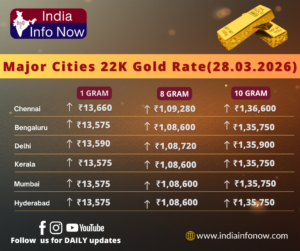 Gold Price Today (28th March 2026): 10g 24K & 22K Gold Rate in India
 -
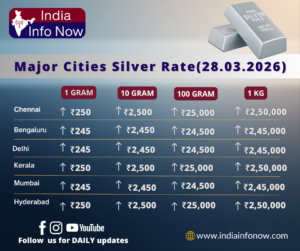 Silver Price Today (28th March 2026): 1g 10g Silver Rate in India
 -
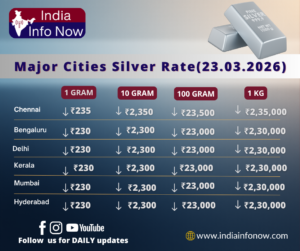 Silver Price Today (23rd March 2026): 1g 10g Silver Rate in India
 -
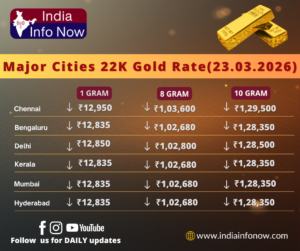 Gold Price Today (23rd March 2026): 10g 24K & 22K Gold Rate in India
 -
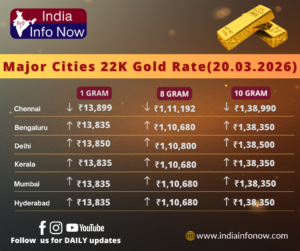 Gold Price Today (21st March 2026): 10g 24K & 22K Gold Rate in India