
Table of Contents
ToggleKundrakkudi Murugan Temple,Sivagangai – Timings, How to Reach, Location
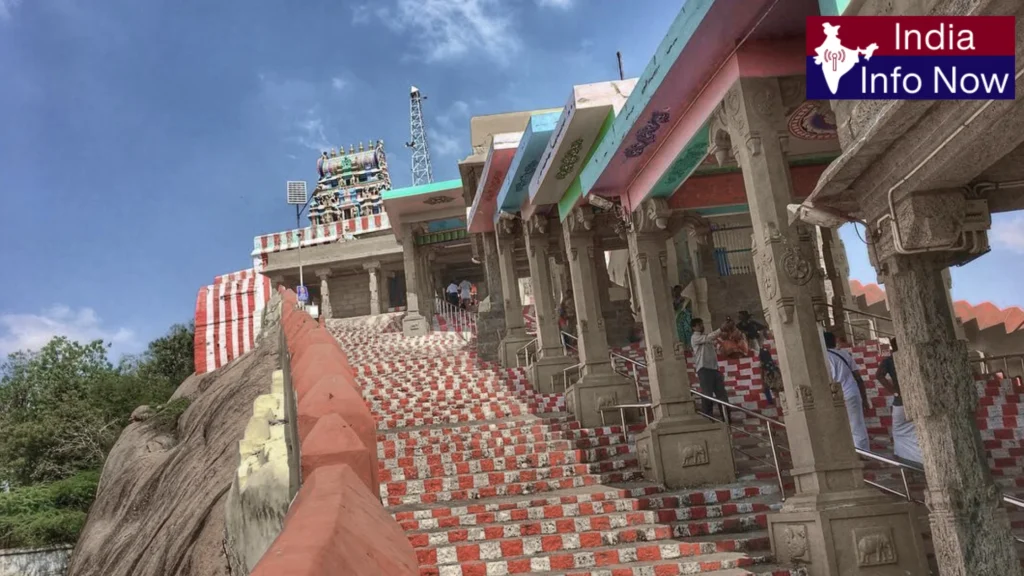
The Kundrakkudi Murugan Temple, also known as Kunnakudi Shanmuganathar Temple, is one of the most revered hill Murugan temples in Tamil Nadu. Situated on a small picturesque hillock near Karaikudi in Sivaganga district, this sacred temple is praised in the Thiruppugazh hymns of Saint Arunagirinathar and holds immense spiritual, historical, and architectural importance and it is one among the Thiruppugazh Murugan Temples.
Kundrakudi is also traditionally known as Kunnakudi, and the temple is efficiently managed and maintained by the Kundrakudi Adheenam, which continues to preserve its ancient traditions and facilities for devotees.
Kundrakkudi Murugan Temple - Presiding Deity and Temple Layout
At the hilltop sanctum, Lord Murugan appears as Lord Shanmuga, with six divine faces, symbolizing supreme wisdom and protection. He is seen seated with his consorts Valli and Deivanai, blessing devotees in a majestic posture.
Surrounding the main deity are shrines for:
- Lord Ganesha
- Lord Shiva
- Lord Kulandaivelappar
- Lord Nataraja
- Lord Bhairavar
- Navagrahas (Nine Planetary Deities)
A unique feature here is that all Navagrahas face Lord Murugan, unlike the usual circular planetary arrangement found in other temples.
At the foot of the hill, there are:
- A small temple for Lord Ganesha
- A separate shrine for Palani Murugan
The Palani Murugan idol is not permanently fixed to the floor. It is ceremonially taken every year by the Kundrakudi Pada Yatra group to Palani during the Thaipoosam festival and brought back afterward.
Along the hill path, devotees also encounter:
- Two mini temples for Lord Ganesha
- One shrine for Lord Kadamba, a devoted follower of Lord Murugan
Kunnakudi Shanmughanathar Temple - Architectural Grandeur and Facilities
The Kundrakkudi Murugan temple complex features two grand welcome arches:
- One near the main road
- Another east-facing arch near the shopping area
- A long tinned roof pathway shelters pilgrims from sun and rain.
Other highlights of the Kunnakudi Shanmuganathar temple include:
- Temple administrative office for seva tickets
- A massive multi-pillared mandapam adorned with colorful sculptures
- Beautifully painted ceilings
- A shrine for Palani Andavar, maintained by the Nagarathar community
- Large car parking area near the sacred tank
Facilities available:
- Head tonsuring
- Ear boring
- Thulabaram
- Marriage hall with certificate issuance
- Shops for pooja items
- Drinking water and rest areas
Sacred Geography and Theerthams
The Kunnakudi Shanmughanathar Temple is believed to have been built over 2000 years ago on a peacock-shaped hillock, on the banks of the ancient River Thenaaru.
Sacred water bodies include:
- Saravana Poigai
- Thenaaru
- Mayil Theertham
Devotees commonly perform:
- Kavadi offering
- Milk pot (Paal Kudam)
- Anga Pradakshanam (full body circumambulation)
Present-day worshippers also offer pepper and salt at Saravana Poigai and Idumban Sannidhi for relief from skin ailments.
Cave Temples and Historical Importance
At the western base of the hill lies the Thenatrunathar Temple complex, consisting of three adjacent rock-cut cave shrines dedicated to Lord Shiva.
- All three face west
- Each houses a Shiva Lingam
- The first two caves feature intricate Pandya-era sculptures and dwarapalakas
These shrines date back to the 8th century Pandya period and are regarded as some of the earliest known sculptural representations of Dwarapalakas in South India.
Lord Shiva here is worshipped as Thenatrunathar, named after River Thenaaru.
The temple was patronized by:
- Pandya Kings
- Later renovated by the Marudhu Brothers
It is believed that King Periya Marudhu was cured of a serious illness by Lord Murugan’s grace after worshipping here.
Legends also say that:
- The Pandavas
- Sage Agasthya worshipped at this sacred hill.
Literary and Spiritual Recognition of Kundrakkudi Murugan Temple
The temple is glorified in:
- Thiruppugazh hymns (Thiruppugazh Murugan Temples) by Saint Arunagirinathar
- Mayuragiri Puranam, a Tamil work describing the temple’s history
The famous Tamil saint Kundrakudi Adigalar lived here, served society and religion, and attained Samadhi at this holy site.
A unique belief here is that Murugan, Valli, and Deivanai grant darshan individually seated on a peacock, an exceptionally rare divine vision.
Kunnakudi Shanmughanathar Temple Festivals
Major festivals include:
- Thai Poosam (Jan–Feb)
- Panguni Uthiram (Mar–Apr)
- Vaikasi Visakam (May)
- Aadi Krittigai (Jul–Aug)
- Skanda Sashti (Oct–Nov)
These festivals draw thousands of devotees from across Tamil Nadu and neighboring states.
Kudrakkudi Murugan Temple Timings
| Details | Information |
|---|---|
|
Timings |
6:00 AM – 11:00 AM & 4:00 PM – 8:00 PM |
|
General Entry |
Free for all devotees |
|
Online booking |
Not Available |
How to Reach Kundrakkudi Murugan Temple
By Road
- 10 km from Karaikudi
- 12 km from Thiruppathur
- Frequent buses from Karaikudi, Thiruppathur, Madurai, Tiruchirappalli
By Train
- Karaikudi Junction (KKDI) – nearest railway station
By Air
- Tiruchirappalli International Airport (TRZ) – 83 km
- Madurai International Airport (IXM) – 97 km
Conclusion
Kundrakkudi Murugan Temple stands as a magnificent blend of devotion, ancient Tamil architecture, spiritual legends, and cultural heritage. From its six-faced Shanmuga deity and sacred theerthams to its rare rock-cut Pandya shrines and deep association with Thiruppugazh, the Kunnakudi Shanmuganathar temple offers devotees a profoundly divine experience.
Frequently Asked Questions
1.Why is Lord Murugan called Shanmuga here?
At Kundrakkudi Murugan Temple, Murugan is depicted with six faces, hence he is called Shanmuga, meaning “the six-faced Lord.”
2. Is Kunnakudi Shanmuganathar temple mentioned in Thiruppugazh?
Yes. The temple is praised in the Thiruppugazh hymns composed by Saint Arunagirinathar, making it a Thiruppugazh Paadal Petra Thalam.
3. Who manages the Kundrakkudi Murugan temple?
The temple is managed and maintained by the Kundrakudi Adheenam.
Most Popular
-
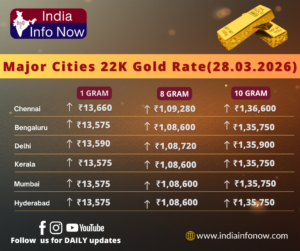 Gold Price Today (28th March 2026): 10g 24K & 22K Gold Rate in India
 -
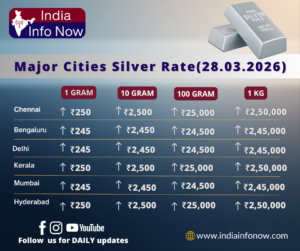 Silver Price Today (28th March 2026): 1g 10g Silver Rate in India
 -
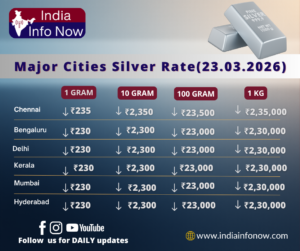 Silver Price Today (23rd March 2026): 1g 10g Silver Rate in India
 -
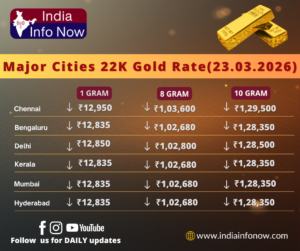 Gold Price Today (23rd March 2026): 10g 24K & 22K Gold Rate in India
 -
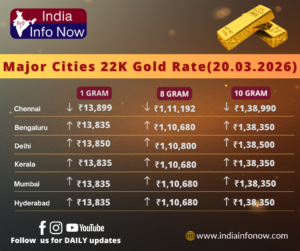 Gold Price Today (21st March 2026): 10g 24K & 22K Gold Rate in India