
Table of Contents
ToggleImportant Things to Consider Before Buying Land in Bengaluru

Buying land in Bengaluru is a major investment decision due to the city’s fast-growing infrastructure, IT corridors, and rising property values. However, plot purchases involve complex legal, regulatory, and financial checks. A small mistake in documentation or zoning can lead to years of legal trouble or financial loss.
This comprehensive guide explains the most important things to check before buying land in Bengaluru.
Mistakes to avoid when buying land in Bengaluru include the Title deed. The Title Deed is the most critical document as it establishes legal ownership of the land.
What to check:
- Ask for the original title deed.
- Verify the seller’s name matches government records.
- Trace the chain of ownership for at least 30 years.
- If ownership changed through gift, inheritance, or partition, verify supporting documents.
- Ensure the deed is properly stamped and registered.
It is highly recommended to consult a real estate lawyer to authenticate the documents and confirm the title is clear and marketable.
2. Check the Encumbrance Certificate (EC)
The Encumbrance Certificate confirms whether the land has any loans, mortgages, court attachments, or legal claims; it is an important legal checklist for buying land in Bengaluru.
Best practices:
- Obtain EC for 15–30 years from the Sub‑Registrar Office or online.
- It should ideally state “Nil Encumbrance”.
- If any transaction appears, verify it using supporting documents (old sale deeds or loan closure letters).
Never rely only on the seller’s statement.
3. Confirm Land Conversion Certificate
Many plots in Bengaluru were originally agricultural land.
Before construction, the land must be converted to Non‑Agricultural (Residential) use.
Check for:
- Land Conversion Certificate issued by the Deputy Commissioner.
- Confirmation that conversion applies to the entire layout, not just the individual plot.
Unconverted land cannot be legally used for housing even if registration is completed.
4. Verify Zoning and Land Use Regulations: Plot Buying Tips Bengaluru
Even converted land must comply with zoning laws.
Authorities involved:
- BDA (Bangalore Development Authority)
- BBMP (Bruhat Bengaluru Mahanagara Palike)
- BMRDA / BIAPPA (for outskirts and airport region)
Confirm:
- Zoning category (Residential / Commercial / Mixed / Industrial)
- Whether residential construction is permitted
Avoid green belts and industrial zones to prevent future demolition or rejection of building plans.
5. Khata Certificate and Khata Extract (A Khata Only)
Legal checklist for buying land in Bengaluru include Khata. Khata proves the property is recorded in municipal tax records.
Types:
- A‑Khata – legally approved (preferred)
- B‑Khata – unauthorized or pending approvals (high risk)
Ensure:
- Khata Certificate and Extract are available
- Owner name and plot details match sale documents
Without Khata, you cannot obtain building approval, water, electricity, or bank loans.
6. Sale Deed Verification
The Sale Deed is the final proof of transaction.
It must include:
- Buyer and seller details
- Survey number, boundaries, and plot size
- Sale consideration and payment method
- Special clauses if any
Always have the draft reviewed by a lawyer before registration.
7. Property Tax Receipts: Legal Checklist for Buying Land in Bengaluru
Unpaid property tax can delay registration and loans.
Verify:
- Latest BBMP or Panchayat tax receipts
- No pending dues
Survey number matches land records
8. Government Approvals & NOCs
For layouts and gated communities:
Required approvals may include:
- BDA / BMRDA / BIAPPA layout approval
- NOC from:
- BESCOM (electricity)
- BWSSB (water)
- Fire Department (if applicable)
- Environmental authorities (large layouts)
Lack of approvals can lead to denial of utilities or demolition notices.
9. Physical Site Inspection & Infrastructure
Always visit the site personally.
Check for:
- Access roads
- Drainage system
- Electricity poles
- Water availability
- Encroachments
- Boundary stones
Well‑developed infrastructure improves resale value significantly.
10. Soil Test and Topography Survey
Before construction:
- Conduct soil testing through a certified geotechnical engineer
- Check load‑bearing capacity
- Evaluate water table level
- Identify flood‑prone or low‑lying areas
Poor soil quality increases construction cost and structural risk.
11. Investigate Legal Disputes
Confirm that the land is free from:
- Court cases
- Family disputes
- Government acquisition plans
Lawyer verification is strongly recommended.
12. Budget Planning and Hidden Costs
Your budget should include:
- Plot price
- Stamp duty & registration fees
- Legal charges
- Khata transfer cost
- Infrastructure charges
- Property tax
- Construction cost
Avoid stretching your finances with high EMIs.
13. Location Evaluation & Growth Potential
Choose areas with:
- Good road connectivity
- Metro / ring road projects
- IT corridors
- Schools and hospitals
High‑growth zones:
- Whitefield
- Sarjapur Road
- Electronic City
- Devanahalli
- Hoskote
- Rajanukunte
Infrastructure development directly impacts appreciation.
14. RERA Registration
Legal checklist for buying land in Bengaluru includes:
- Verifying RERA registration number
- Cross‑checking project details online
RERA protects buyers against project delays and legal irregularities.
15. Seek Professional Assistance
Engage:
- Real estate lawyer
- Licensed surveyor
- Registered broker
Professional verification reduces risk significantly.
Final Thoughts: Buying Land in Bengaluru
Buying land in Bengaluru can be highly rewarding, but only when backed by strong legal due diligence and careful financial planning. Mistakes to avoid when buying land in Bengaluru include clear title, government approvals, zoning compliance, and infrastructure quality.
Frequently Asked Questions
1.What is the difference between A‑Khata and B‑Khata?
When you are buying land in Bengaluru, A‑Khata properties are legally approved and eligible for construction, loans, and utilities. B‑Khata properties are unauthorized or have pending approvals and carry legal risks.
2. Is land conversion mandatory while buying land in Bengaluru?
Yes. Agricultural land must be converted to Non‑Agricultural (Residential) using a conversion certificate issued by the Deputy Commissioner before construction.
3. How can I get an Encumbrance Certificate while buying land in Bangalore?
You can apply online through Karnataka’s land records portal or obtain it from the local Sub‑Registrar Office for the past 15–30 years.
4. Which authority approves layouts in Bengaluru?
Layouts are approved by BDA, BBMP, BMRDA, or BIAPPA depending on the location of the plot.
5. Is RERA registration compulsory for plotted developments?
Yes, most plotted developments must be registered under Karnataka RERA, which protects buyers from fraud and project delays.It is one of the important things to check before buying land in Bengaluru
Most Popular
-
 Gold Price Today (28th March 2026): 10g 24K & 22K Gold Rate in India
 -
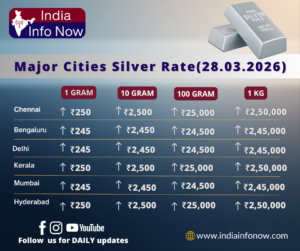 Silver Price Today (28th March 2026): 1g 10g Silver Rate in India
 -
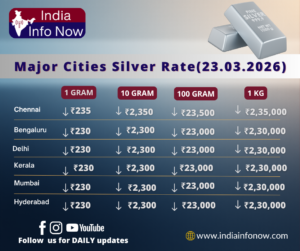 Silver Price Today (23rd March 2026): 1g 10g Silver Rate in India
 -
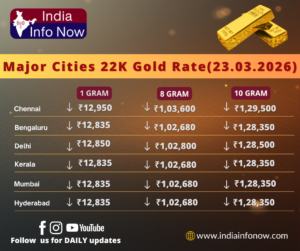 Gold Price Today (23rd March 2026): 10g 24K & 22K Gold Rate in India
 -
 Gold Price Today (21st March 2026): 10g 24K & 22K Gold Rate in India