
Table of Contents
ToggleImportant Things to Consider Before Buying Land in Virudhunagar

Virudhunagar is steadily emerging as a preferred destination for land buyers due to its industrial presence, improving infrastructure, and proximity to key towns like Sivakasi, Rajapalayam, and Madurai. Whether you’re planning to build a home, invest for the future, or purchase agricultural land, careful evaluation is essential to avoid legal, financial, and practical issues. Here are the most important factors to consider before buying land in Virudhunagar.
Before finalizing any land deal, verifying the ownership is absolutely critical. Land disputes often arise due to unclear titles or fraudulent sellers. Always cross-check the owner’s details and confirm that the seller has full legal rights to sell the property.
Key documents that confirm land ownership include:
Patta Passbook
Title Deed
“A” Register Extract
Encumbrance Certificate (EC)
These documents help a legal expert determine whether the property has a clear title and is free from legal complications. Never proceed without proper verification.
2. Check Land Classification and Usage
Land in Tamil Nadu falls under various classifications, and not all categories are legally purchasable. Ensure the land you intend to buy in Virudhunagar is not classified as:
Government land
Forest land
Assigned land for landless poor
Prohibited or restricted land
Understanding the land’s classification helps you avoid legal issues and ensures hassle-free ownership in the future.
3. Verify Sale Deed and Agreement Details
A legally valid sale deed is essential. The document should clearly mention:
Total land area
Survey number
Boundaries
Seller’s name and address
Buyer’s details
Both parties must sign the agreement, and it should be witnessed by at least two individuals. Avoid incomplete or vague documentation, as it may cause ownership disputes later.
4. Stamp Duty and Registration
Stamp duty and registration are mandatory for legal ownership. Stamp duty rates vary depending on the state and land type. In Tamil Nadu, the buyer is responsible for paying stamp duty and registration charges.
During registration:
Sale deed
Previous title deed
Latest tax receipts
Two witnesses
must be present at the Sub-Registrar’s Office. Proper registration ensures your ownership is legally recognized.
5. Mutation of Land Records
Mutation updates the land records in the government database with the new owner’s name. After registration, you must apply for mutation within 90 days by submitting Form 6A to the Tahsildar’s office.
Mutation is crucial for:
Property tax assessment
Future resale
Legal clarity
You can also obtain an updated patta passbook during this process.
6. Environmental and Surrounding Factors
Evaluate the surrounding environment carefully. Check for:
Nearby industries or pollution sources
Flood-prone zones
Waterlogging issues
Soil quality
In Virudhunagar, certain areas may experience heavy rainfall during monsoons. Understanding environmental risks helps you protect your investment and plan construction accordingly.
7. Future Development Potential
Urban expansion and infrastructure development can significantly impact land value. Research upcoming projects such as:
Road expansions
Industrial zones
Commercial hubs
Residential layouts
Land near future developments often offers higher appreciation and better resale value.
8. Legal and Regulatory Compliance
Before purchasing land, ensure compliance with all legal and regulatory requirements. Verify:
Ownership history
Pending litigations
Local land laws
Agricultural and zoning regulations
Understanding local policies helps avoid penalties or restrictions in the future.
9. Land Use and Zoning Regulations
Check whether the land is approved for residential, commercial, or agricultural use. Some zones restrict construction or farming activities. Buying land that aligns with your purpose saves time and money.
10. Financial Viability and ROI
Evaluate your budget realistically. Apart from the land cost, include:
Stamp duty
Registration fees
Legal charges
Development costs
If the purchase is for investment, calculate expected Return on Investment (ROI) based on market trends, demand, and location growth.
11. Approvals and Master Plans
Ensure the land has approvals from:
Local development authorities
Municipal bodies
Also, review the area’s master plan to confirm the land aligns with long-term development strategies.
12. Survey, Boundaries, and NOCs
Hire a licensed surveyor to verify land boundaries and dimensions. This prevents future boundary disputes. Additionally, obtain required No Objection Certificates (NOCs), especially if the land is near water bodies, highways, or environmentally sensitive areas.
13. Location and Property Value
Location plays a major role in property appreciation. Look for:
Good road connectivity
Access to schools, hospitals, and markets
Proximity to transport hubs
Property value depends on taxation, infrastructure, and development prospects, so assess carefully.
14. Government Policies and RERA Compliance
Check whether the property or layout is RERA-registered and complies with government regulations. Always verify builder credibility and approval status before investing.
Frequently Asked Questions
1.Is DTCP approval mandatory for plots in Virudhunagar?
Yes. DTCP approval is essential for suburban and rural plots. Within town limits, approval from the local municipality or panchayat is required.
2.Are there any government acquisition risks in Virudhunagar?
Yes. Always verify whether the land is marked for future roads, industrial projects, or public infrastructure by checking local master plans.
3. Should I consult a legal expert before buying land?
Yes. A property lawyer helps verify documents, approvals, and legal compliance, reducing future risks.
Most Popular
-
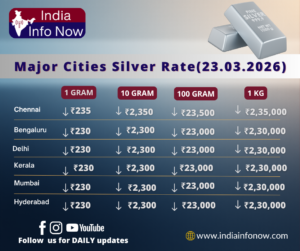 Silver Price Today (23rd March 2026): 1g 10g Silver Rate in India
 -
 Gold Price Today (23rd March 2026): 10g 24K & 22K Gold Rate in India
 -
 Gold Price Today (21st March 2026): 10g 24K & 22K Gold Rate in India
 -
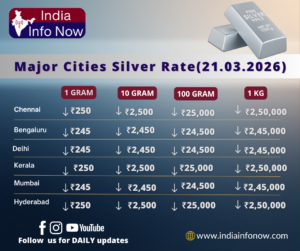 Silver Price Today (21st March 2026): 1g 10g Silver Rate in India
 -
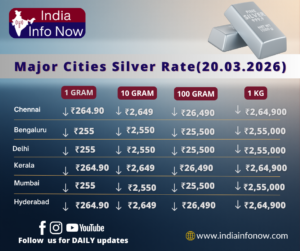 Silver Price Today (20th March 2026): 1g 10g Silver Rate in India