
Table of Contents
ToggleImportant Things to Consider Before Buying Land in Salem
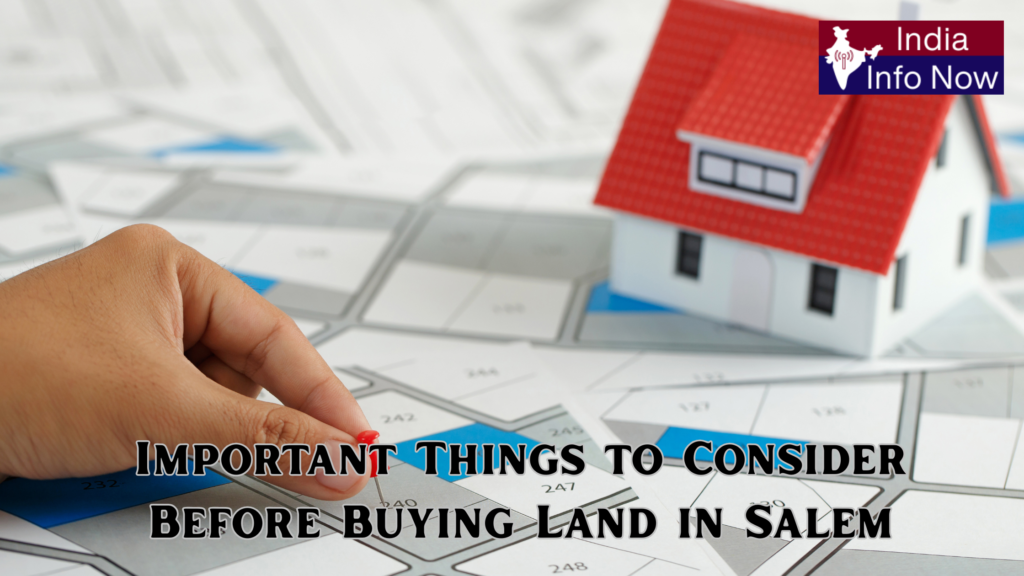
Buying land in Salem is a promising investment, thanks to the city’s growing infrastructure, industrial expansion, and improving connectivity. However, land purchases demand extra caution compared to flats or apartments. From legal verification to zoning regulations, every step must be carefully evaluated to avoid costly mistakes. Below are the most important things to consider before buying land in Salem.
The first and most crucial step is confirming clear ownership and title. Many land disputes in India arise due to unclear titles, multiple ownership claims, or fraudulent documentation. Ensure that the seller has absolute ownership rights and the legal authority to sell for a successful land purchase in Salem Tamil Nadu.
Documents to verify include:
Title deed
Record of Rights (RoR)
Previous ownership chain
Encumbrance Certificate (EC)
Engaging a real estate lawyer to review these documents is highly recommended to prevent future legal issues.
Never rely solely on what is shown on-site. Physical boundaries may differ from official records. Hire a licensed government surveyor to measure and confirm:
Exact plot dimensions
Boundary alignment
Fencing accuracy
This step helps prevent encroachment disputes and ensures you receive the exact land area you pay for.
3. Obtain an Encumbrance Certificate (EC)
Major checklist before buying land in Salem includes an encumbrance certificate. An Encumbrance Certificate confirms whether the land is free from financial liabilities such as loans, mortgages, or legal claims. Always obtain an up-to-date EC from the Sub-Registrar Office. A clean EC provides peace of mind and ensures the land is legally safe for purchase.
4. Understand NA (Non-Agricultural) Status and Zoning
By default, most land in India is classified as agricultural. If you plan to build a house or commercial property, the land must be converted to Non-Agricultural (NA) use.
Also, confirm the exact NA classification:
NA – Residential
NA – Commercial
NA – Industrial
NA – Resort or Warehouse
Only NA–Residential land allows residential construction. Zoning mismatches can completely block your intended use.
5. Verify Builder or Developer Rights
One of the important things to consider before buying land in Salem: If purchasing from a developer, confirm whether
The land is registered in the builder’s name, or
A legally registered joint development agreement exists
Request documents proving the builder’s right to sell or develop the land. Transparency at this stage significantly reduces risk.
6. Check Bank Loan Approvals for the Project
If a bank has financed the plot scheme, it usually indicates that:
Legal due diligence has been completed
Land approvals are verified
Cash flow is stable for development
While not mandatory, bank-funded projects often offer higher credibility and reduced risk.
7. Assess Infrastructure and Amenities
Land value in Salem is closely tied to infrastructure. Ensure access to:
Motorable roads
Water supply
Electricity
Drainage systems
Proximity to schools, hospitals, markets, and industrial zones significantly boosts appreciation and resale potential.
8. Evaluate Soil Quality and Topography
One of the important things to consider before buying land in Salem is soil quality. Soil condition directly impacts construction cost and safety. Low-lying areas may be flood-prone, while rocky or clay-heavy soil can increase foundation expenses. Understanding soil quality helps you plan construction realistically and avoid future issues.
9. Research Previous Use of the Land
Important things to consider before buying land in Salem include research about land usage. Investigate how the land was previously used. Industrial or chemical activities may have contaminated soil or groundwater. Also, check historical ownership records to ensure there are no unresolved legal or environmental issues.
10. Budget Planning and Hidden Costs
Beyond the land price, an important budget checklist before buying land in Salem includes the following:
Stamp duty (around 7% in Tamil Nadu)
Registration charges
Conversion charges (if applicable)
Survey and legal fees
Development and fencing costs
Proper budgeting ensures a smooth transaction without financial strain.
11. Financing and Land Loans
Banks offer loans only for legally approved plots. Loan approval depends on:
Zoning classification
Local authority approvals
Intended land use (residential or commercial)
Unapproved land often results in loan rejection, forcing buyers to arrange full cash payments.
12. Registration and Legal Ownership Transfer
Once due diligence is complete, register the sale deed at the Sub-Registrar Office. Registration legally establishes ownership and must be followed by mutation in local revenue records.
13. Location Selection and Market Potential in Salem
Salem’s real estate market shows strong demand, with active listings across residential plots and apartments. Average plot prices range between ₹12–20 lakh, making it attractive for first-time buyers and investors alike. Areas close to industrial hubs, highways, and planned infrastructure developments show faster appreciation.
Final Thoughts: Buying Land in Salem
Land purchase in salem Tamil Nadu can be highly rewarding if done correctly. Thorough legal checks, proper zoning verification, infrastructure assessment, and realistic budgeting are essential to secure a safe and profitable investment. Taking the time to evaluate every detail today can protect your investment for decades to come.
Frequently Asked Questions
1. How can I confirm if the land has a clear title?
Check the ownership history through the title deed and EC. Ensure there are no legal disputes, joint ownership issues, or pending loans. A clear title means the seller has full legal rights to transfer ownership.
2. Is NA conversion mandatory before buying land in Salem?
If the land is agricultural and you plan to construct a house or commercial property, NA (Non-Agricultural) conversion is mandatory. Always confirm the land’s zoning and permitted usage for a safe land purchase in Salem Tamil Nadu.
3.Are bank loans available for buying land in Salem?
Yes, banks offer land loans for approved plots in authorised layouts. Usually, up to 60–70% of the land value is financed. Unapproved or disputed land may not qualify for loans.
Most Popular
-
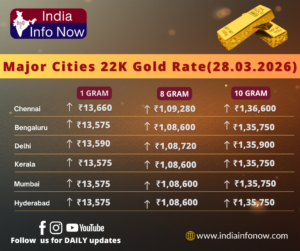 Gold Price Today (28th March 2026): 10g 24K & 22K Gold Rate in India
 -
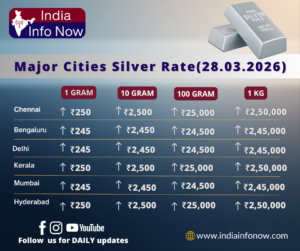 Silver Price Today (28th March 2026): 1g 10g Silver Rate in India
 -
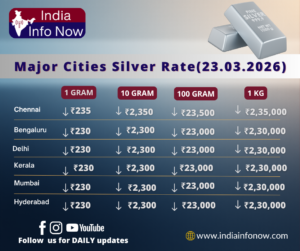 Silver Price Today (23rd March 2026): 1g 10g Silver Rate in India
 -
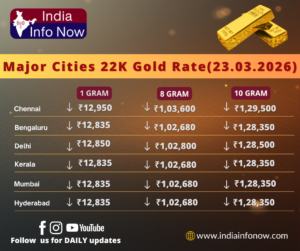 Gold Price Today (23rd March 2026): 10g 24K & 22K Gold Rate in India
 -
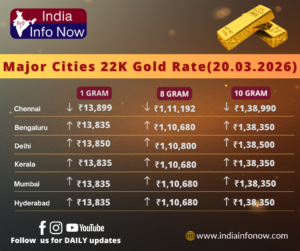 Gold Price Today (21st March 2026): 10g 24K & 22K Gold Rate in India