
Table of Contents
ToggleImportant Things to Consider Before Buying Land in Namakkal
Buying land in Namakkal can be a smart long-term investment, especially with the district’s steady infrastructure growth, highway connectivity, and rising demand for residential and commercial plots. However, land purchase involves higher legal and practical risks compared to buying a flat or house. Before investing your hard-earned money, it is essential to evaluate several critical factors to avoid future disputes and losses.
There is a well-known saying in North India that most disputes arise due to Zar (Money), Zoru (Woman), or Zameen (Land)—and in India, land disputes top the list of legal cases. Namakkal is no exception.
Before purchasing land, ensure the property is completely free from:
Existing legal disputes
Multiple pledges or mortgages
Boundary conflicts
Claims from legal heirs
Government acquisition or road expansion notices
Tribal or agricultural land restrictions
It is highly advisable to hire a local, experienced property lawyer in Namakkal who understands Tamil Nadu land laws, local revenue records, and registration procedures. A competent lawyer can help verify the title and prevent future litigation.
2. Land Appreciates Faster, But Only If Chosen Right
Land generally appreciates faster than flats or houses since there is no depreciation due to ageing. However, appreciation depends heavily on multiple factors:
Location and future development plans
Road access and connectivity
Shape and size of the plot
Direction and orientation
Surrounding neighbourhood and amenities
Ignoring these aspects can turn a valuable asset into a liability. In Namakkal, proximity to highways, educational institutions, and industrial zones significantly influences land value.
3. Verify All Essential Land Documents
Unlike apartments, where multiple owners share responsibility, land ownership makes you the sole stakeholder. Hence, documentation must be flawless. Ensure all legal heirs of the landowner are involved in the sale deed.
Mandatory documents to check include:
Patta / 7/12 Document – Proof of title and ownership
6/12 Document – Past ownership and transaction history
8/A or Chitta/Adangal – Land revenue and tax details
Encumbrance Certificate (EC) – Always insist on 30 years EC, not just 13 years
Release Certificate – Required if there are joint owners or previous pledges
Survey Sketch & Field Measurement Book (FMB) – Confirms exact land boundaries
DC / Conversion Certificate – Mandatory if agricultural land is converted for residential use
Missing even one of these documents can create serious issues during resale or construction.
4. Ensure Proper Land Surveillance
Open plots are highly vulnerable to trespassing and illegal occupation, especially in developing areas around Namakkal. Land mafia typically target properties where owners live outside the city or visit infrequently.
Before buying land, ask yourself:
Can I visit the plot regularly?
Do I have relatives or contacts nearby?
Is fencing possible immediately?
If you have a transferable job or live far away, purchasing land may not be ideal unless adequate surveillance is ensured.
5. Check Soil Quality Before Finalising
Soil quality plays a major role in construction safety and cost. Poor soil can weaken foundations and increase expenses. If you plan to build a house or have a garden, conduct a soil test through a local engineer to assess load-bearing capacity and fertility.
6. Orientation and Plot Direction Matter
Plot orientation affects sunlight, ventilation, and energy efficiency. North-facing or east-facing plots are often preferred as they allow better daylight and reduce electricity consumption. Proper window placement and room orientation should be considered even before purchasing the land.
7. Confirm Land Use & Zoning Regulations
Always verify the Namakkal Master Plan to confirm zoning classification. Land may fall under:
Residential
Commercial
Industrial
Agricultural
Public or semi-public zones
Construction is permitted only as per zoning rules. Agricultural land must be legally converted to Non-Agricultural (NA) land before any construction. Failure to do so can lead to penalties or demolition notices.
8. Verify Clear Plot Boundaries
Clear boundary demarcation avoids future disputes. Choose plots with:
Approved layouts
Clearly marked cornerstones
Survey department approval
A certified surveyor can help match on-ground measurements with official records.
9. Check Groundwater Availability and Quality
Water scarcity is a growing issue in many parts of Tamil Nadu. Before buying land in Namakkal:
Check groundwater depth
Verify borewell feasibility
Test water quality using TDS meters
Saline or brackish water is unsuitable for construction and daily use and can damage appliances.
Conclusion
Buying land in Namakkal can be highly rewarding if done carefully. Legal verification, zoning compliance, water availability, and security are non-negotiable factors. With due diligence and professional guidance, you can secure a safe investment that grows in value over time.
Frequently Asked Questions
1. What is zoning and why should I check it?
Zoning defines how land can be used—residential, commercial, industrial, or agricultural. Buying land in the wrong zone can restrict construction and future resale.
2. How do I confirm plot boundaries in Namakkal?
Hire a licensed surveyor to verify the plot boundaries using the Field Measurement Book (FMB) and approved survey sketch to avoid encroachment or boundary disputes.
3.Is groundwater availability important before buying land?
Yes. Groundwater depth and quality affect construction cost and daily water usage. Always check borewell feasibility and water quality before finalising the purchase.
Most Popular
-
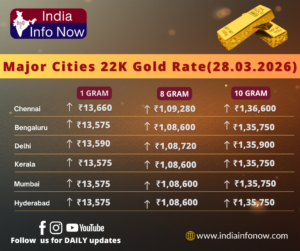 Gold Price Today (28th March 2026): 10g 24K & 22K Gold Rate in India
 -
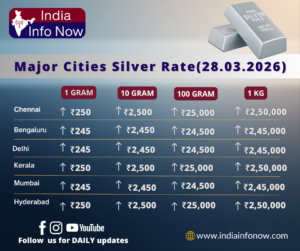 Silver Price Today (28th March 2026): 1g 10g Silver Rate in India
 -
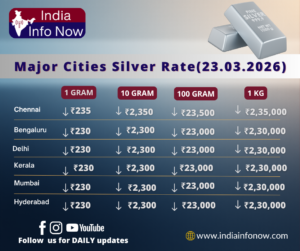 Silver Price Today (23rd March 2026): 1g 10g Silver Rate in India
 -
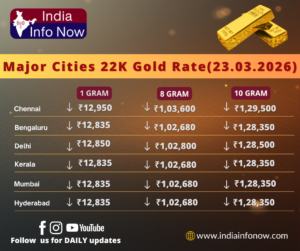 Gold Price Today (23rd March 2026): 10g 24K & 22K Gold Rate in India
 -
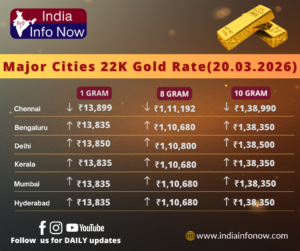 Gold Price Today (21st March 2026): 10g 24K & 22K Gold Rate in India