
Table of Contents
ToggleImportant Things to Consider Before Buying Land in Hosur

Hosur has rapidly emerged as one of the most preferred destinations for land investment in South India. Located strategically between Bengaluru and Chennai, the city offers strong industrial growth, excellent infrastructure, and comparatively affordable land prices. Whether you are planning to build a home, villa, or invest for long-term appreciation, buying land in Hosur can be a rewarding decision—provided you do your due diligence.
Below are the most important factors to consider before purchasing land in Hosur.
The title deed is the most critical document when buying land. It legally proves ownership and ensures the seller has the right to transfer the property.
Key checks include:
The seller’s name must match the title deed
No pending disputes, litigation, or ownership claims
Properly recorded past transactions (sale, gift, or partition deeds)
Always obtain copies of the sale deed, parent deed, and previous transaction records. It is highly recommended to consult an independent property lawyer for title verification.
2. Check DTCP or Panchayat Approvals
Land approval status determines whether you can legally build on the plot.
DTCP-approved plots are sanctioned by the Directorate of Town and Country Planning and are ideal for residential development.
Panchayat-approved plots are common in semi-rural areas but must be verified carefully for legality and future conversion potential.
Ask for:
Approved layout plans
Sanctioned drawings
Road width and civic infrastructure approvals
DTCP-approved plots in Hosur generally have higher resale value and better loan eligibility.
3. Confirm RERA Registration
If the land is part of a plotted development or layout, RERA registration offers additional buyer protection.
RERA ensures:
Transparency in project details
Legal compliance for infrastructure and amenities
Accountability in case of delays or disputes
Verify the RERA registration number on the official Tamil Nadu or Karnataka RERA website, depending on jurisdiction.
4. Check the Encumbrance Certificate (EC)
The Encumbrance Certificate (EC) confirms whether the land is free from:
Legal liabilities
Outstanding loans
Mortgages or court attachments
Obtain an EC for at least the last 30 years from the Sub-Registrar’s Office. A clear EC is mandatory for safe ownership transfer and bank loans.
5. Review Khata Certificate and Extract
The Khata Certificate and Khata Extract confirm that the property is registered with the local authority and property taxes are being paid.
Importance of Khata:
Required for property registration
Mandatory for home loans
Essential for resale and future development
Ensure the land is properly recorded in municipal or Panchayat records.
6. Physical Verification of the Plot
Never rely solely on documents—visit the site personally.
Check:
Plot boundaries as per survey records
Any encroachment or illegal occupation
Road access and approach width
Availability of water, drainage, and electricity
Engage a licensed surveyor if required to confirm land measurements and boundaries.
7. Understand the Type of Land & FSI
Before investing, clearly define your purpose:
Residential villa
Apartment development
Commercial or mixed-use
Long-term investment
Also verify the FSI (Floor Space Index) applicable to the plot. FSI determines how much construction is legally permitted and is regulated by local development authorities.
Understanding land usage and FSI prevents future construction restrictions.
8. Local Authority & Neighbourhood Analysis
Evaluate the surrounding development and infrastructure carefully.
Consider:
Access to schools, hospitals, and shopping centres
Public transport connectivity
Proximity to highways and industrial zones
Planned infrastructure projects like flyovers or metro links
Strong neighbourhood amenities directly influence land appreciation and livability.
9. Land Investment & Growth Analysis
Before finalising, conduct a proper valuation and growth study.
Key methods include:
Comparative Analysis: Compare prices of similar nearby plots
Builder Insights: Consult local developers for pricing trends
Development Analysis: Evaluate FSI, amenities, and future projects
Belt Method: Assess distance from highways and major roads
This helps determine whether the quoted price is fair and future-ready.
10. Risk Assessment & Long-Term Planning
Land investment requires patience and strategic thinking.
Important risks to evaluate:
Reserved or restricted zones
Liquidity risk (ease of resale)
No immediate rental income
Long-term holding period required for appreciation
Confirm that the seller has full ownership rights and that the land is free from legal complications.
11. Verify Seller Identity & Documentation
Ensure the seller:
Is the legal owner
Has valid identity proof (Aadhaar, PAN)
Has the authority to sell (especially in joint ownership cases)
All documentation must be verified before executing the sale agreement.
Final Thoughts
Buying land in Hosur is a smart investment choice due to its strategic location, industrial growth, and rising demand. However, success depends on legal clarity, approvals, location analysis, and long-term vision.
Frequently Asked Questions
1. Are Panchayat-approved plots safe to buy in Hosur?
Panchayat-approved plots can be safe if properly verified. However, they may face future conversion or loan eligibility issues. Always check layout approval, road access, and future development plans before buying.
2.What is FSI and why does it matter when buying land?
FSI (Floor Space Index) determines how much construction is allowed on a plot. It is regulated by local authorities and directly affects building size, number of floors, and investment value.
3.Are there risks involved in buying land in Hosur?
Yes. Key risks include:
Legal disputes
Restricted or reserved land zones
Liquidity risk
No immediate rental income
Proper due diligence significantly reduces these risks.
Most Popular
-
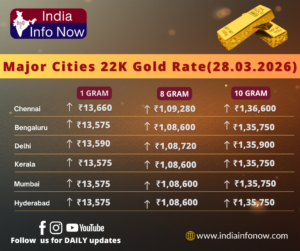 Gold Price Today (28th March 2026): 10g 24K & 22K Gold Rate in India
 -
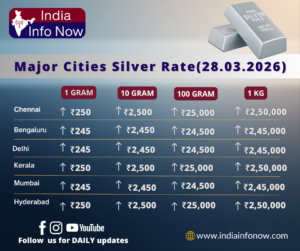 Silver Price Today (28th March 2026): 1g 10g Silver Rate in India
 -
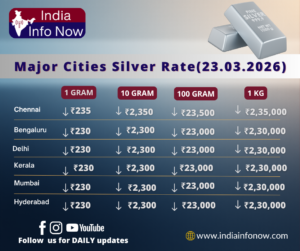 Silver Price Today (23rd March 2026): 1g 10g Silver Rate in India
 -
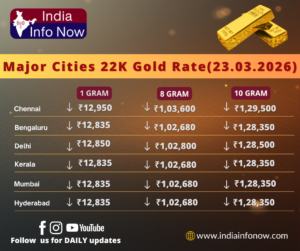 Gold Price Today (23rd March 2026): 10g 24K & 22K Gold Rate in India
 -
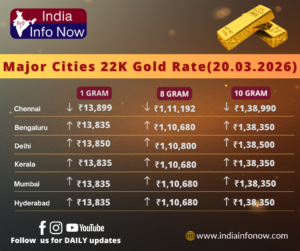 Gold Price Today (21st March 2026): 10g 24K & 22K Gold Rate in India