
Table of Contents
ToggleShri Balasubrahmanya Swami Temple, Ayikudi – Timings, How to Reach, Location
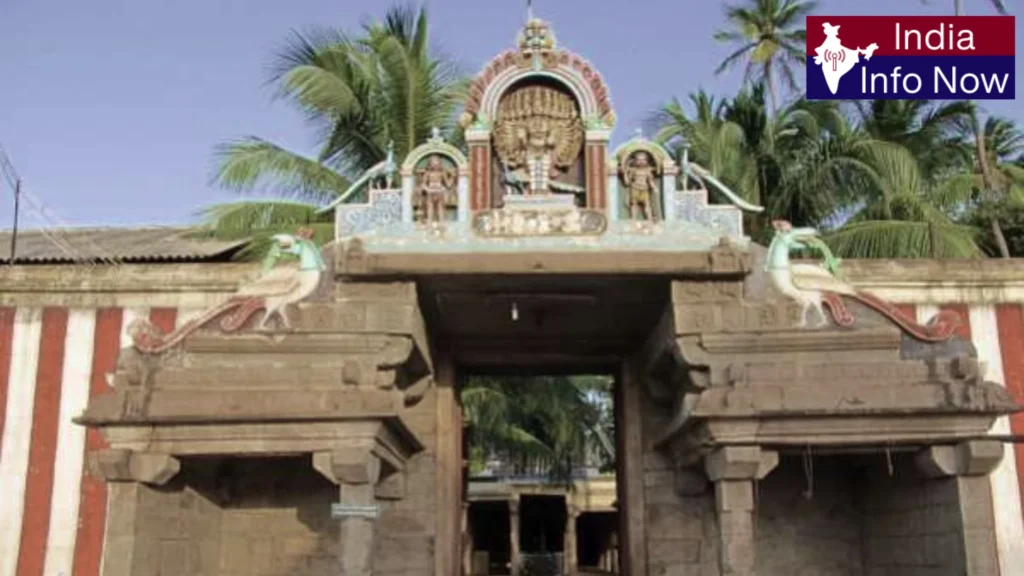
The Ayikudi Balasubrahmanya Swami Temple is a revered Murugan shrine located on the serene banks of the Hanuman Nadi (river) in Tirunelveli district, Tamil Nadu (PIN: 627852). Nestled amidst lush greenery and divine tranquility, the temple lies about 7 km from Tenkasi, 10 km from Courtallam (Kutrallam), and 60 km from Tirunelveli.
Ayikudi was historically known as Ariyar Kudi or Arya Kuti, meaning “the abode of noble people.” The temple is a celebrated Tiruppugazh Sthalam, praised by Saint Arunagirinathar in his devotional hymns, adding immense spiritual importance to this sacred site.
Ayikudi Balasubrahmanya Swami Temple History
The Ayikudi Murugan temple was originally built by the Travancore Maharajas, as this region was under the Travancore kingdom until 1947. Records suggest that until 1931, the temple roof was made of coconut and palm leaves. About 150 years ago, the Travancore royal family assumed formal management of the temple, undertook major renovations, and established regular festivals and rituals.
Due to its royal patronage, the temple displays a distinctive Kerala-style architectural influence, which sets it apart from conventional Tamil Nadu Murugan temples.
The presiding deity, Lord Murugan, is worshipped here as Balasubramanya Swamy, where the word “Bala” in Tamil means “child.” Accordingly, the Lord appears as a divine young boy seated gracefully on a lotus pedestal (Padmapeetam).
The idol is small yet exquisitely crafted, with four hands:
- One hand holding Vajram (thunderbolt)
- One holding Shakti weapon (Vel)
- One showing Abhaya Mudra (gesture of protection)
- One holding the Peacock, His sacred vahana, seen to His left
He is also fondly known as Rama Subramanya Swamy in this region.
A rare and sacred feature of the Ayikudi Balasubrahmanya Swami Temple is the worship of Pancha Vrikshas (five holy trees) and Pancha Devatas (five deities).
Pancha Vrikshas (Five Sacred Trees)
These trees form a natural canopy around the main sanctum:
- Arasa Maram (Peepal) – Surya (Sun God)
- Vembu (Neem) – Ambikai (Parvati)
- Kariveppilai (Curry leaf) – Mahesha (Shiva)
- Madhulai (Pomegranate) – Ganesha
- Maavilangu – Vishnu
Pancha Devatas
Surrounding the main deity:
- On the right side: Mahadeva (Shiva), Vishnu, Ambikai, Ganesha
- On the left side: Aditya (Sun God)
Lord Balasubramanya Swamy stands at the center of these sacred energies, making the temple spiritually powerful and unique.
Legends Associated with the Temple
According to the Ramayana legend, Lord Hanuman created the Hanuman Nadi by striking the ground with the sharp edge of his tail when he became thirsty on his journey to Lanka. It is also believed that Lord Rama rested on the banks of this river, sanctifying the land further.
Another belief states that Lord Hanuman stayed here for some time, meditating on Lord Rama, making the river and temple surroundings deeply sacred.
Special Rituals & Offerings
Padi Payasam
One of the most famous offerings of the Ayikudi Balasubrahmanya Swami Temple is prepared using rice and milk on the river steps (Padi). Devotees believe this offering fulfills wishes, especially blessings for childbirth.
Arasa Elai Vibhuthi
Sacred ash given on a peepal leaf, believed to cure ailments and remove negative energies.
Paalkudam & Kavadi
Devotees perform Paalkudam dance and carry Kavadi during festivals as acts of devotion.
The Ayikudi Murugan temple is also a popular center for Karya Siddhi (success in endeavors), removal of obstacles, and family well-being.
Architecture & Temple Layout
The Ayikudi Balasubrahmanya Swami Temple beautifully blends Dravidian design with Kerala architectural elements. One of its most striking features is its river-facing orientation, with stone steps leading directly into the Hanuman Nadi, symbolizing purity and divine connection.
The Maha Mandapam is adorned with finely carved pillars depicting scenes from the Ramayana, including Lord Rama and Hanuman.
The Ayikudi Murugan temple structure gracefully incorporates the Pancha Vrikshas, making nature an inseparable part of worship.
Ayikudi Murugan Temple Timings
Evening: 5:00 PM – 8:00 PM
Morning: 6:00 AM – 12:00 PM
Daily abhishekam, archana, and special poojas are performed by dedicated priests.
Ayikudi Balasubrahmanya Swami Temple Festivals
The Utsava Murthi (processional deity) is Muthukumara Swamy, taken in grand processions during festivals.
Major Festivals
- Skanda Shashti (Soora Samharam) – Aipasi month (Nov–Dec), celebrated for 7 days
- Chithirai Vishu – Tamil New Year (April–May)
- Vaigasi Vishakam – Murugan’s birth star (May–June)
- Thaipusam – Jan–Feb, Kavadi festival
- Masi Makam – Feb–Mar
During Skanda Shashti, the divine battle with Soorapadman is enacted with great devotion, often followed by Thirukkalyanam (divine marriage).
How to Reach Ayikudi Murugan Temple
- Nearest Town: Tenkasi – 7 km
- Courtallam: 10–12 km
- Tirunelveli: 60 km
By Road: Well connected by buses and taxis from Tenkasi, Courtallam, and Tirunelveli.
Nearest Railway Station: Tenkasi
Nearest Airport: Madurai (approx. 200 km)
Frequently Asked Questions
1. What is special about the idol in the Ayikudi Murugan temple?
The idol is small and beautifully crafted with four hands holding Vajram, Shakti (Vel), showing Abhaya Mudra, and holding a peacock. The Lord sits on a lotus pedestal (Padmapeetam).
2. What is Pancha Vriksha worship in this temple?
The main deity is surrounded by five sacred trees – Arasa (Peepal), Neem, Curry leaf, Pomegranate, and Maavilangu. These represent Surya, Ambikai, Shiva, Ganesha, and Vishnu respectively.
3. What are the Pancha Devatas in Ayikudi Balasubrahmanya Swami Temple?
Five deities – Shiva, Vishnu, Ambikai (Parvati), Ganesha, and Surya – are worshipped along with Lord Murugan around the main sanctum.
4. Why is this temple considered a Tiruppugazh Sthalam?
Saint Arunagirinathar has sung hymns in praise of the Ayikudi Murugan temple and Lord Murugan here in his Tiruppugazh compositions.
Most Popular
-
 Gold Price Today (28th March 2026): 10g 24K & 22K Gold Rate in India
 -
 Silver Price Today (28th March 2026): 1g 10g Silver Rate in India
 -
 Silver Price Today (23rd March 2026): 1g 10g Silver Rate in India
 -
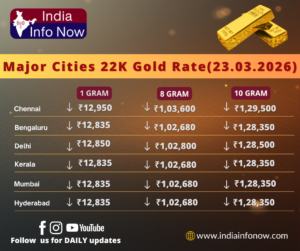 Gold Price Today (23rd March 2026): 10g 24K & 22K Gold Rate in India
 -
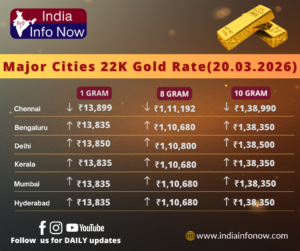 Gold Price Today (21st March 2026): 10g 24K & 22K Gold Rate in India