
Today Petrol Price & Diesel Price & CNG Price
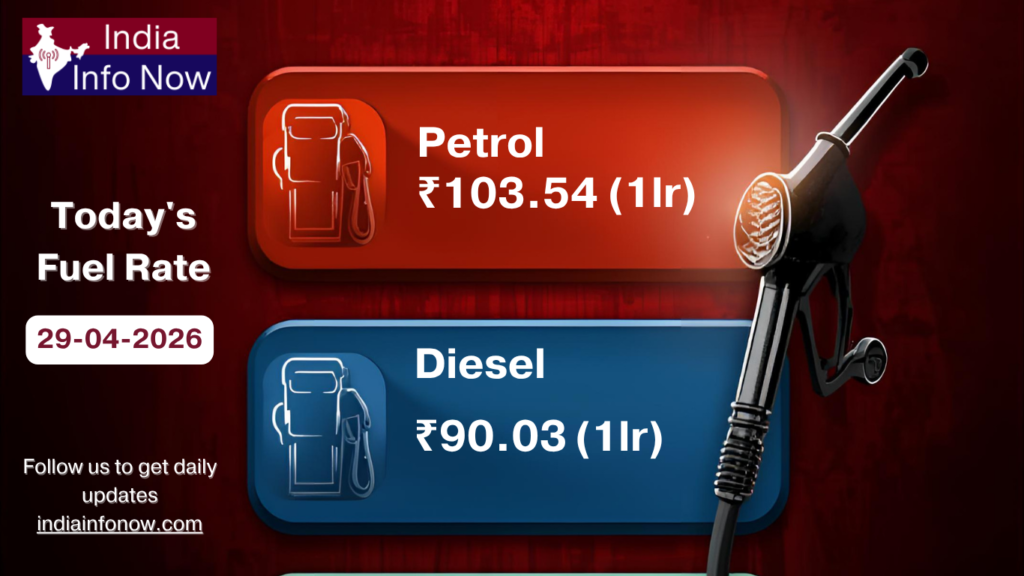
India’s petrol prices are shaped by several key factors, including global crude oil trends, domestic taxation policies, and fluctuations in the rupee’s exchange rate. Recent observations show that petrol in India costs more than in some neighboring countries, largely due to the comparatively higher taxes levied on fuel within the country.
| CITY | PETROL | DIESEL | CNG |
|---|---|---|---|
|
Chennai |
₹101.23 |
₹92.61 |
₹91.50 |
|
Mumbai |
₹103.54 |
₹90.03 |
₹81.00 |
|
New Delhi |
₹94.77 |
₹87.67 |
₹77.09 |
|
Kolkata |
₹105.45 |
₹92.02 |
₹77.00 |
|
Hyderabad |
₹107.50 |
₹95.70 |
₹97.00 |
|
Bengaluru |
₹102.92 |
₹90.99 |
₹90.00 |
Key Factors Influencing Petrol Price Today India
Petrol prices in India are determined by multiple economic and policy-related factors. Major influences include fluctuations in international crude oil prices, the value of the Indian rupee against the US dollar, and central and state government taxes. Additionally, refining costs, transportation expenses, and dealer commissions also contribute to the final retail price consumers pay at fuel stations.
Crude Oil Cost
The price of crude oil in the global market is the primary factor affecting petrol prices in India. When international crude oil rates rise, the cost of refining petrol increases, leading to higher fuel prices for consumers. Conversely, a drop in crude oil prices can help reduce petrol rates, provided taxes and other costs remain stable.
Increased Demand
Higher demand for petrol, especially during peak travel seasons or strong economic activity, can push fuel prices upward. When consumption rises faster than supply, oil companies may adjust retail prices to balance the market and manage distribution costs.
Tax Rates
Taxes imposed by both the Central and State Governments play a significant role in determining petrol prices in India. Components such as excise duty and Value Added Tax (VAT) form a large portion of the final retail cost. Since VAT differs across states, petrol prices often vary from one state to another.
Tax Rates
Taxes imposed by both the Central and State Governments play a significant role in determining petrol prices in India. Components such as excise duty and Value Added Tax (VAT) form a large portion of the final retail cost. Since VAT differs across states, petrol prices often vary from one state to another.
Rupee to Dollar Exchange Rate
Since crude oil is imported and traded globally in US dollars, the value of the Indian rupee against the dollar directly impacts petrol prices. When the rupee weakens, oil imports become more expensive, which can lead to higher petrol prices. Conversely, a stronger rupee can help ease fuel costs.
How Petrol Price Today India is Determined
Petrol prices in India are calculated through a dynamic pricing system that reflects both global and domestic factors. The process begins with the international price of crude oil, since India imports a large portion of its crude requirement. The rupee–dollar exchange rate also plays a crucial role, as oil is traded globally in US dollars—any weakening of the rupee increases import costs.
After crude oil is purchased, refining costs are added to convert crude into petrol. This is followed by freight and transportation charges to move the fuel to different regions across the country. Oil marketing companies then include their margins along with dealer commissions paid to petrol pump operators.
Finally, central excise duty and state-level Value Added Tax (VAT) are applied, which together form a significant portion of the retail price. Because VAT rates vary by state, petrol prices often differ from one location to another. The combined impact of these components determines the petrol price consumers pay each day.
Why is the diesel price in India different from the petrol price?
Diesel and petrol prices in India differ because they have different cost structures, demand patterns, and tax treatments.
First, the refining process yields petrol and diesel in different proportions, and their international benchmark prices often move differently based on global demand. Diesel is widely used for transportation, agriculture, and industry, which strongly influences its pricing dynamics.
Second, the tax structure is usually different. Historically, diesel has been taxed lower than petrol by both the central and many state governments to keep logistics and essential goods transportation costs under control. This tax gap is one of the biggest reasons diesel is often cheaper than petrol.
Third, demand patterns vary. Petrol demand is driven mainly by private vehicles, while diesel demand is tied to commercial activity such as trucks, buses, and generators. Because of its economic importance, governments often manage diesel pricing more cautiously.
Together, differences in global pricing, taxation, usage patterns, and policy decisions lead to the price gap between petrol and diesel in India.
Compressed Natural Gas (CNG)
Benefits of CNG
CNG (Compressed Natural Gas) offers several advantages for vehicle owners and the environment. It is generally more cost-effective than petrol and diesel, helping reduce daily fuel expenses. CNG burns much cleaner, producing significantly lower emissions of carbon monoxide, nitrogen oxides, and particulate matter, which helps improve air quality.
It is also safer because CNG is lighter than air and disperses quickly in case of leakage, reducing fire risk. Additionally, CNG causes less engine carbon buildup, which can lead to smoother engine performance and lower maintenance costs over time.
Benefits of CNG
Benefits of CNG
CNG (Compressed Natural Gas) offers several advantages for vehicle owners and the environment. It is generally more cost-effective than petrol and diesel, helping reduce daily fuel expenses. CNG burns much cleaner, producing significantly lower emissions of carbon monoxide, nitrogen oxides, and particulate matter, which helps improve air quality.
It is also safer because CNG is lighter than air and disperses quickly in case of leakage, reducing fire risk. Additionally, CNG causes less engine carbon buildup, which can lead to smoother engine performance and lower maintenance costs over time.
Most Popular
-
 தினமும் முட்டை சாப்பிடலாமா? நன்மைகள், கொலஸ்ட்ரால் மற்றும் யாரெல்லாம் கவனமாக இருக்க வேண்டும்?
 -
 இரவில் சாப்பிடக்கூடாத உணவுகள் என்ன? தூக்கத்தை பாதிக்கும் 7 உணவுகள்
 -
 தினமும் நடப்பதால் ஏற்படும் மாற்றங்கள் | நடைப்பயிற்சி நன்மைகள்
 -
 காலை எழுந்தவுடன் தண்ணீர் குடிப்பது நல்லதா? முழு தகவல்
 -
 தேர்வு நேரத்தில் குழந்தைகளுக்கு கொடுக்க வேண்டிய 10 மூளை ஆரோக்கிய உணவுகள்
Today, the petrol price in Mumbai, India, is ₹103.54 per litre.