
Table of Contents
ToggleSri Kanchi Kamakshi Amman Temple – Timings, How to Reach, Location
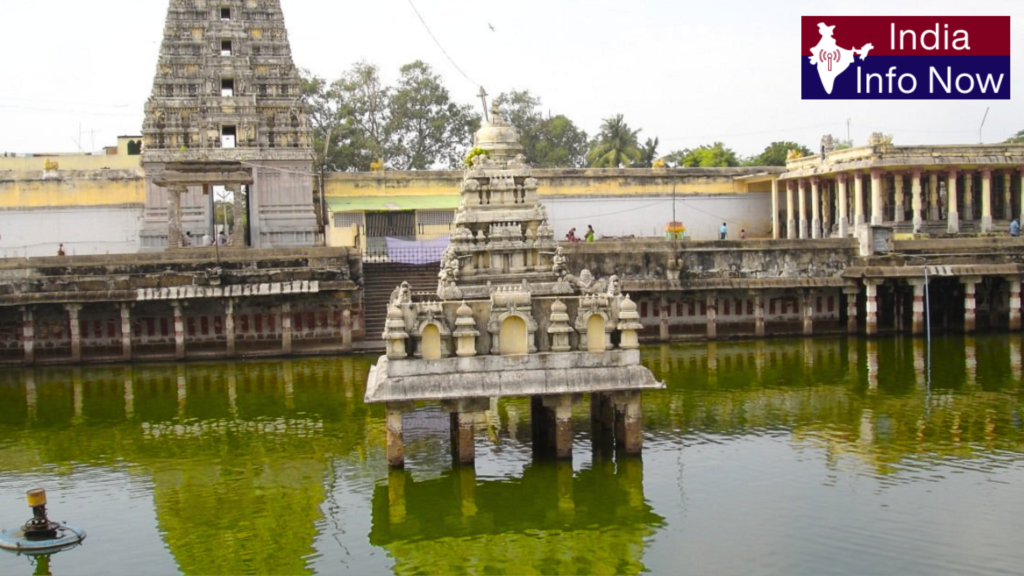
The Sri Kanchi Kamakshi Amman Temple is one of the most sacred Shakti Peethas of South India and a prominent center of Devi worship in Tamil Nadu. Located on Sri Kamakshi Amman Sannathi Street, near Periya Kanchipuram, this ancient temple is revered as the abode of Goddess Kamakshi, the divine form of Parvati Devi.
Believed to have been built in the 6th century AD by the Pallava kings, the temple holds immense religious, cultural, and historical importance. What makes this shrine truly unique is that it is the only Parvati temple in Kanchipuram, a city otherwise filled with numerous Shiva and Vishnu temples.
| Details | Information |
|---|---|
|
Deity |
Goddess Kamakshi (Parvati) |
|
Address: |
6, Sri Kamakshi Amman Sannathi Street,
Periya Kanchipuram, Tamil Nadu – 631502
|
|
Temple Timings |
5:30 AM – 8:00 PM |
|
Entry Fee |
Free for all devotees |
|
Live Darshan |
Not available |
|
Special Poojas |
• Swarna Ratha
• Sahasranama Archana
• Ashtotthara Archana
|
|
Abhishekam Ticket |
₹1000 per person (online booking available) |
|
Dress Code |
Any decent traditional attire |
|
Best Time to Visit |
October to March |
About Goddess Kamakshi
Goddess Kamakshi is seated in the Padmasana (lotus) posture, symbolizing supreme tranquility and spiritual wisdom. She holds:
A sugarcane bow
A bunch of flowers in her lower hands
A pasha (lasso) and ankusha (goad) in her upper hands
A parrot rests gracefully on the flowers, and a crescent-shaped Chandraperai adorns her forehead.
The name “Kamakshi” is derived from three words:
Ka – Goddess Saraswati
Ma – Goddess Lakshmi
Akshi – Eyes
Meaning: “She whose eyes embody the grace of Lakshmi and the wisdom of Saraswati.”
Sri Adi Shankaracharya installed the powerful Sri Chakra (Srichakram) before the main deity, believing it to contain the immense cosmic energy of Goddess Kamakshi.
Spiritual Significance and Legends: Kanchi Kamakshi Temple
Durvasa Maharishi and Sri Chakra
Sage Durvasa is believed to have worshipped Goddess Kamakshi here to overcome a curse. He later installed the Sri Chakra and composed the sacred text “Saubhagya Chintamani Kalpa” (Durvasa Samhita), which describes the detailed rituals for worshipping the Goddess. Even today, temple rituals strictly follow this ancient scripture.
Only priests belonging to seven specific gotras, known as Shastris, are eligible to perform poojas. However, only two serve here regularly, while the remaining officiate at the Kamakshi Temple in Thanjavur.
Adi Shankaracharya and the Fierce Form of the Goddess
It is believed that the sanctum once radiated extreme heat, symbolizing the Goddess’s Raudra (fierce) form. Sri Adi Shankaracharya pacified her through intense devotion and prayers, transforming her into her present Shanta (peaceful) form. He also composed the famous “Soundarya Lahari” hymn here.
Blessings for Childless Couples
According to legend, King Dasharatha of Ayodhya, belonging to the Ikshvaku dynasty, performed the sacred Putra Kameshti Yagam here at the Nabisthanam seeking offspring. Soon after, he was blessed with children, including Lord Rama. Goddess Kamakshi is therefore regarded as the Kuladevi of the Ikshvaku clan, and childless couples strongly believe in receiving divine blessings by praying at this temple. This story is referenced in the Markandeya Purana.
The Story of Mookan – From Silence to Poetry
A mute devotee named Mookan prayed to the Goddess for speech so he could praise her glory. The Goddess blessed him with the power of speech and poetic brilliance. He went on to compose the famous hymn “Mookapanchashati” containing 500 verses glorifying her beauty and compassion.
The temple celebrates numerous grand festivals throughout the year:
- Navaratri (Sharda & Chaitra)
- Brahmotsavam (Magh – Jan/Feb) – includes golden lion and silver chariot processions
- Shiva–Kamakshi Kalyanam (Phalgun – Feb/March)
- Chaitra Gold Chariot Festival
- Aadi Festival
- Aippasi Pooram
- Vasanta Utsavam
- Sankara Jayanthi
- On the final day of Brahmotsavam (full moon), devotees and the Goddess participate in a sacred temple tank dip.
During certain festivals, the Goddess is also taken on a ceremonial boat ride (Theppa Utsavam).
By Air:
The nearest airport to Kanchipuram is Chennai International Airport, located approximately 61 km away. The airport is well connected with regular domestic and international flights to major cities across India and abroad. From the airport, visitors can easily hire taxis or use bus services to reach Kanchipuram.
By Train:
Kanchipuram has excellent railway connectivity with important cities such as Chennai, Pondicherry, Kanyakumari, Mumbai, Tirupati, Madurai, Dindigul, and Tirunelveli. The nearest railway station to the temple is Kanchipuram CJ Railway Station, which is just 1 km away. From the station, auto-rickshaws and local buses are readily available to reach the temple within minutes.
By Road:
Kanchipuram is well connected by a network of national and state highways, making road travel convenient and comfortable. Frequent government and private bus services operate from major cities including Chennai, Vellore, Tirupati, Bengaluru, Coimbatore, Madurai, and Trichy.
Frequently Asked Questions
1. What is special about the idol of Goddess Kamakshi?
She is seated in Padmasana posture, holding a sugarcane bow, flowers, pasha (lasso), and ankusha (goad), with a parrot resting on the flowers and a crescent moon on her forehead.
2. Who installed the Sri Chakra in the Kanchi Kamakshi temple?
Sri Adi Shankaracharya installed the Sri Chakra (Srichakram) before the main deity.
3. What are the Sri Kanchi Kamakshi Amman temple timings?
The temple is open daily from 5:30 AM to 8:00 PM.
Most Popular
-
 தினமும் முட்டை சாப்பிடலாமா? நன்மைகள், கொலஸ்ட்ரால் மற்றும் யாரெல்லாம் கவனமாக இருக்க வேண்டும்?
 -
 இரவில் சாப்பிடக்கூடாத உணவுகள் என்ன? தூக்கத்தை பாதிக்கும் 7 உணவுகள்
 -
 தினமும் நடப்பதால் ஏற்படும் மாற்றங்கள் | நடைப்பயிற்சி நன்மைகள்
 -
 காலை எழுந்தவுடன் தண்ணீர் குடிப்பது நல்லதா? முழு தகவல்
 -
 தேர்வு நேரத்தில் குழந்தைகளுக்கு கொடுக்க வேண்டிய 10 மூளை ஆரோக்கிய உணவுகள்